Sunday, 4/02/17 Fifth Sunday of Great Lent —Commemoration of Our Venerable Mother, Mary of Egypt
9:00 a.m. +Ella Sowa requested by Walnycky family
10:30 a.m. Pro Popolo
Epistle: Heb. 9:11-14
Gospel: Mark 10:32-45, Tone 5
Monday, 4/03/17 Venerable Father and Confessor Nicetas, Abbot of the Monastery of Medicius
8:00 a.m. +Ivan and Halyna Lobay requested by Maria Lobay
Tuesday, 4/04/17 Our Venerable Fathers Joseph the Hymnographer and George of Maleum
9:00 a.m. +Mary Plaskonos (40 days, Pan.) requested by the Plaskonos family
Wednesday, 4/05/17 Holy Martyrs Theodulus and Agathopedes and companions
9:00 a.m. Liturgy of the Presanctified Gifts
Thursday, 4/06/17 Repose of Our Holy Father Methodius, Teacher of Slavs
8:00 a.m. no intention for the Divine Liturgy
Friday, 4/07/17 Venerable Father George, Bishop of Mitylene
7:00 p.m. Liturgy of the Presanctified Gifts
Saturday, 4/08/17 Lazarus Saturday —Holy Apostles Herodion, Agabus, Rufus, Asyncretus, Phlegontus, and Hermes
8:00 a.m. no intention for the Divine Liturgy
Sunday, 4/09/17 Palm Sunday —the Lord’s Entrance into Jerusalem
8:40 a.m. Lytja and the Blessing of Bread
9:00 a.m. Special Intention
Second Sunday of the Parish Mission preached by Father Robert Markovitch
Blessing of Pussywillows and Anointing
10:30 a.m. Pro Popolo
Epistle: Phil. 4:4-9
Gospel: John 12:1-18, Tone 6
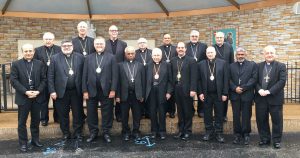 The Eastern Catholic Associates meeting 2017.
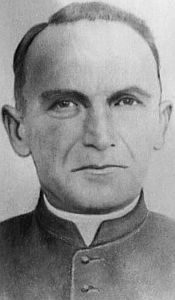 In addition to the Solemnity Annunciation celebrated today, we also have Blessed Emilian Kovch (1884-1944), a married Eastern Catholic priest and father of six who was persecuted under Communism and Nazism. Father Kovch died on March 25, 1944. He was beatified by St. John Paul II on 27 June 2001.
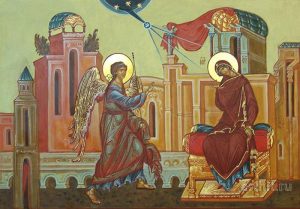 This weekend we are celebrating the mystery of our Lord’s accepting human nature for our salvation. The Archangel Gabriel asks Mary to receive God’s plan and become the mother of the Son and Word of God, to be named “Jesus,” “Savior.” Mary replies, “Behold, I am the handmaid of the Lord. May it be done to me according to your word. (Luke 1:38)” Mary’s response to God was perfect and reversed the sin of Eve. In our Lenten journey, we
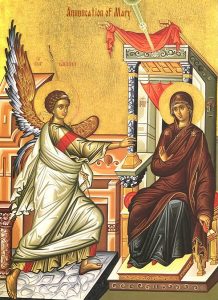 Annunciation of Mary, the Mother of God (Theotokos), March 25th
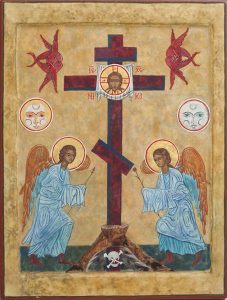 The first half of the Great Fast tells us the stories of Adam and Eve and their children, and the flood of Noah. It is a story of the creation of a perfect world and how that has been marred by human sin. It tells of the end of paradise, “The Lord God therefore banished him from the garden of Eden, to till the ground from which he had been taken. He expelled the man, stationing the cherubim and the fiery revolving sword east of the garden of E