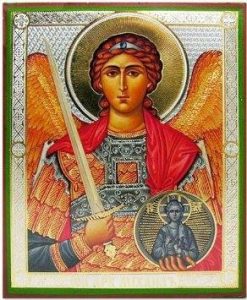
 Today, is the feast day of St Michael the Archangel, and all holy angels according to the Byzantine liturgical calendar (as a point of comparison, the Latin Church in her Novus Ordo liturgy, honors St Michael on September 29).
“Angels, archangels, thrones, dominions, principalities, virtues, powers, and the many-eyed cherubim praise you. You are surrounded by the six-winged seraphim; two wings cover their face, two their feet, and with two they fly, and they call one to another with never-ending and never-silent hymns of praise.” [Liturgy of St. Basil the Great]
“Princes of the heavenly hosts, we, though unworthy, beg you to encircle us through your prayers under the shelter of the wings of your spiritual glory. Guard us as we come to you and sincerely cry: Deliver us from dangers, O princes of the powers on high!”
Catechesis
The Church’s teaching on St. Michael is that he is the leader of the good angels, thus holding the title of “Archangel.” Angels are non-corporeal beings created by God. As spirits without bodies they’re invisible to the human eye. By definition, angels bring to us messages because this is one of the ways God communicates with us. Additionally, the “messengers of God” are the guardians of human persons, and their work is to be constantly singing the praise to God.
One commentator said, “God out of love created the angels and wanted to test them if they too really loved Him. God gave them a command to follow. The good angels readily and gladly obeyed. But some refused to obey and were cast out of heaven to live no longer with Him. Suffering and torment were theirs. The bad angels, also called ‘evil spirits, demons, or devils,’ tempt us, the children of God, to do evil – not listen to God nor to do the good God calls us to do.”
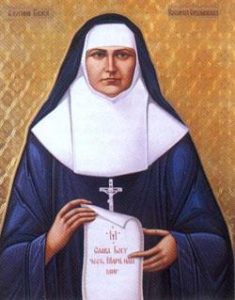 Today, November 20, is the feast day of Blessed Josaphata Hordashevska. Let us be united in prayer for Blessed Josaphata’s canonization.
 Meditation by Very Rev. Dr. David Petras
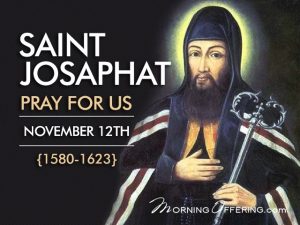 St. Josaphat (1580-1623) was born to a devout religious family of Ruthenian ancestry in what is now Ukraine, and was baptized in the Eastern Orthodox Church. He devoted his virginity to the Virgin Mary and grew in his reverence for ancient liturgy. During a revival of Eastern Catholic monastic life he became a monk in the Order of St. Basil, and was ordained to Holy Orders in the Uk
 Meditation by the Very Rev. Dr. David M. Petras
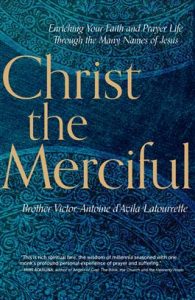 Brother Victor-Antoine d’Avila-Latourrette explores the absolute centrality of Christ in the prayer life of any Christian. The end result is a comprehensive confession of his faith and testimony to the many “names of Christ” that cross through historical, monastic, and mystical traditions. Keeping true to the hope for a unified Church,
 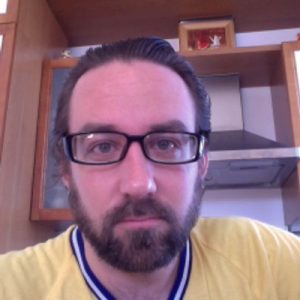 “Freedom or Death” was produced and directed by Damian Kolodiy, an Ukrainian-American filmmaker, who is a graduate of the Film program at Emerson College in Boston, Massachusetts. Kolodiy’s vocation is a spent as writer and independent filmmaker based in New York City, where he was the Program Director of Kinofest NYC, a film festival showcasing contemporary Ukrainian film in New York. (www.KinofestNYC.com) from 2010-2015. Kolodiy’s first feature documentary was on Ukraine’s Orange Revolution titled “The Orange Chronicles”. He freelances as a cameraman and editer, and much of his work has been documentaries of a political nature.