 Read: 1 Timothy 1:15-17; Luke 18:35-43 (Readings of the 31st Sunday after Pentecost)
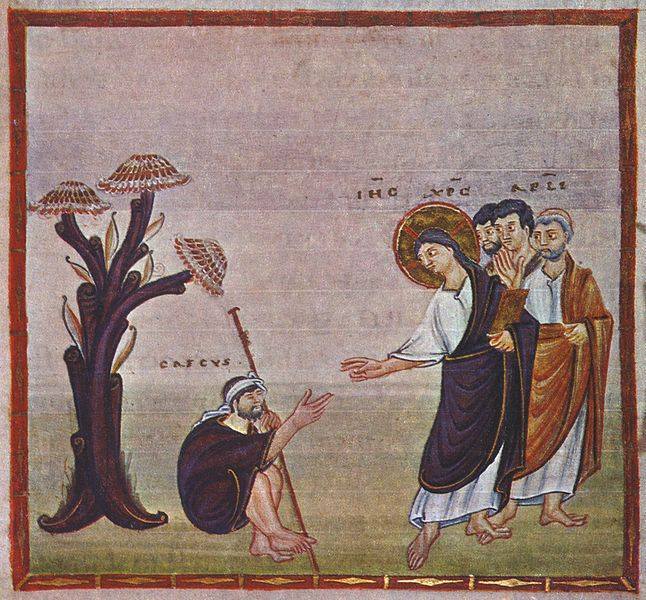
We must learn how to read Scripture. It is not lessons of the past, but the reality of God’s presence among us today, in the here and now. One of the most frequent ways that Jesus steps into our lives is by his works of healing.
In Matthew 11:5 Jesus tells us, “the blind regain their sight, the lame walk, lepers are cleansed, the deaf hear, the dead are raised, and the poor have the good news proclaimed to them.” Today we hear this good news, today the blind see. Jesus often gave sight to the blind, telling them, “Your faith has saved you.” This is what he says to the blind man of Jericho. He cannot see who Jesus is, but when those around him say, “Jesus is passing by,” he immediately shouts as loud as he can, “Jesus, Son of David, have pity on me.” For Jesus, though he is the Word of God, has become one of us, of the family of David.
We might think that the gospel is about physical sight, but it is more than that, it is why faith is necessary. All of us, whether physically blind or spiritually blind, need Jesus who said, “I am the light of the world.” This is why we call baptism “enlightenment.” This is why we must confess that Jesus came to save sinners, “of whom we are the first.” We can say this sincerely, because we know the power of sin in our own hearts, and not in the hearts of others.
We will say this today here in this church as we approach Holy Communion, as we approach the light and life of the world today: you are Christ, the Son of the living God, who came into the world to save sinners, of whom I am the first.” We say this not to crush ourselves down, but as St. Paul tells us to today’s Epistle, but that we might be “mercifully treated, so that in me, as the foremost, Christ Jesus might display all his patience as an example for those who would come to believe in him for everlasting life.” Only in faith, then, do we see the true “light and life.”
Image: Jesus Healing the Blind Man of Jericho (Codex of Egberti)
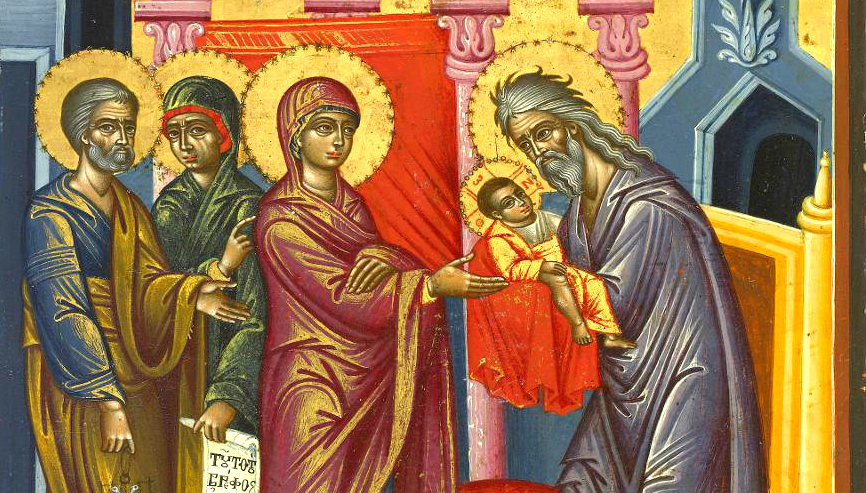 Tomorrow, February 2, is the feast of the Encounter of Our Lord and Savior Jesus Christ. The Divine Liturgy with the Blessing of Candles will be offered at 9:00 a.m. in both English and Ukrainian. This day is a holy day of Love.
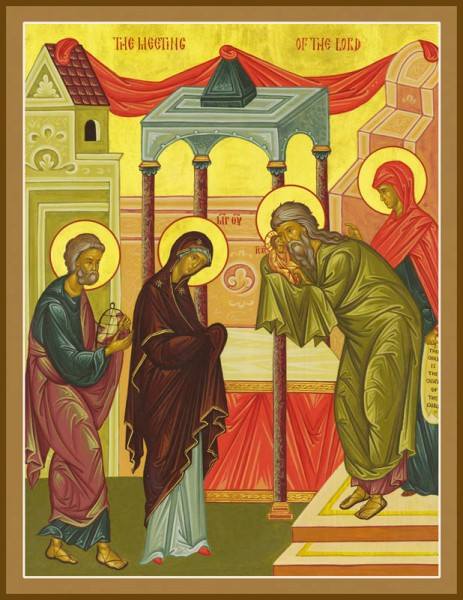 “The Lord said to Moses on that day he brought the sons of Israel out of the land of Egypt. He said: Consecrate to me every firstborn; whatever opens the womb among the Israelites” (Exodus 12:51). In this feast, the last of the Christmas cycle, the Feast of Light, Mary and Joseph bring the child Jesus to the temple to fulfill this commandment.
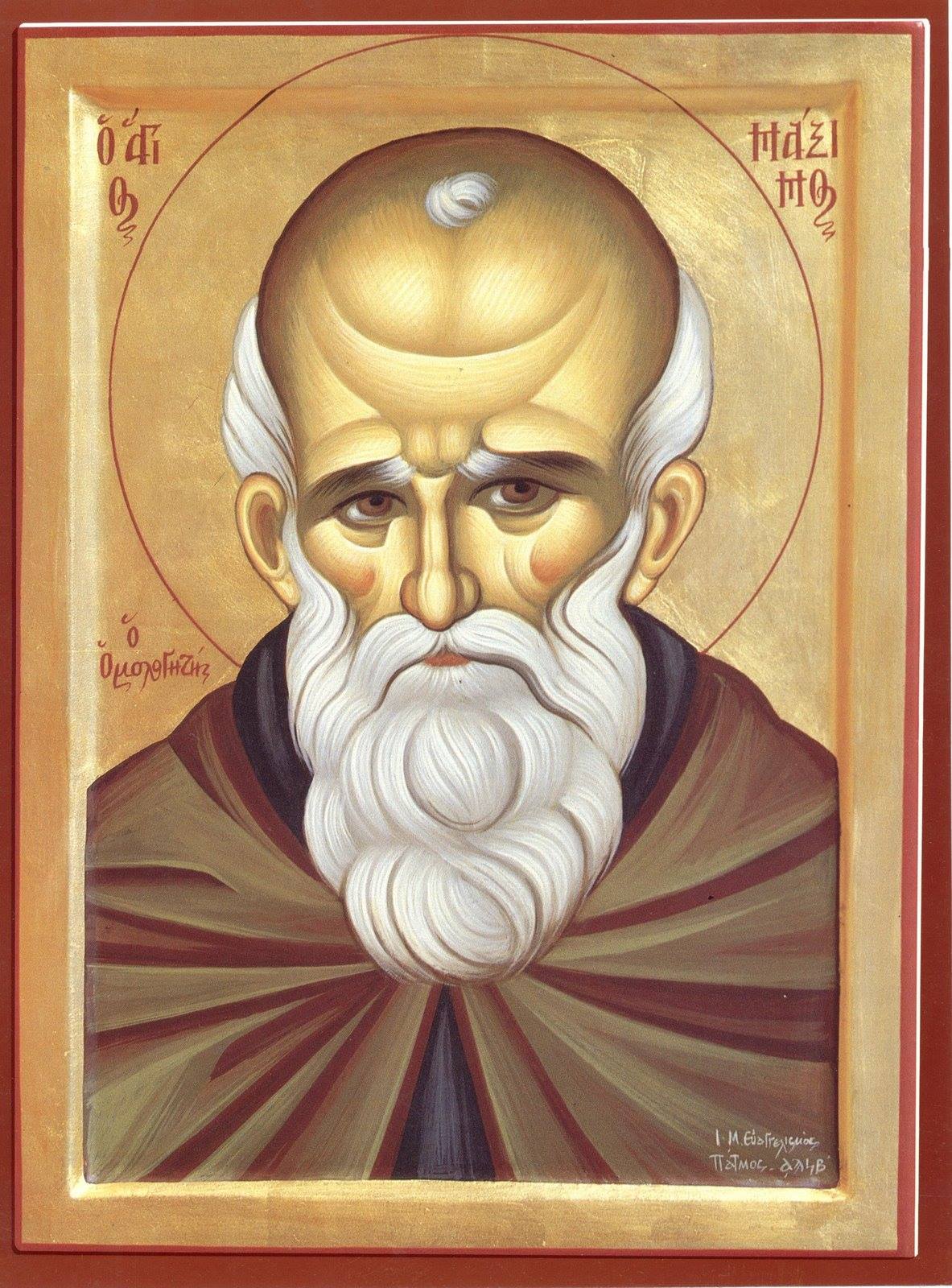 Father John Meyendorff called St. Maximus the Confessor the “Father of Byzantine Theology.” Though he lived long after the Council of Chalcedon, he perhaps drew out the full importance of its confession that Jesus, the Son of God was one in essence with the Father, and yet also united in essence with us in his human nature. Here we see what the gospel stories of Christ’s birth and baptism are truly revealing to us. We call the incarnation, the assumption of the Word of God of human nature, a mystery. This is because we cannot wrap our human minds around this theological reality. To form mental concepts, which we might call “ideologies” are dangerous because they skew the reality. Before Maximus, some theologians put so much emphasis on Christ’s humanity that his divinity was compromised (for example, Arianism or Nestorianism).