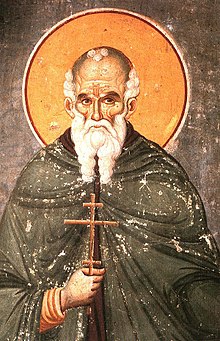
 On the liturgical calendar the Church gives us a venerable father, Athanasius of Athos. His biography is interesting and useful (and a brief one follows) as it is hoped that it would assist all of us, clergy and laity alike, in following Christ more closely in the spiritual life. You may like to recall that among the many things about life in the monastery it is a more intense living of the Gospel and the tradition of the Church.
Athanasius was born near the Black Sea in 925. He was orphaned at a young age and taken to Constantinople, where he was exposed to education, imperial bureaucracy, and monasticism. He chose the life of the monk. After four years he was allowed to live in a hermitage. His hegumen appointed him spiritual father to his two nephews, Nicephoras, who was later to become emperor, and Leo. Athanasius knew that this would lead to unpleasant political entanglements, and he managed to escape to Mt Athos. At that time, the Holy Mountain was only sparsely populated by hermits. The emperor, however, discovered his whereabouts and became Athanasius’ patron. The hermit became hegumen with a cenobium chartered as a ruling monastery.
Since the task of leader was now unavoidable, Athanasius organized the lavra, adapting the Studite Typicon to his wilderness situation. In the years that followed, three other monasteries were built on Mt Athos, and Athanasius was made archimandrite over the entire peninsula. This enraged the old hermits who had settled there in hopes of preserving Athos as a desert in the primitive sense, and who wanted the territory free from the encroachments of the imperial establishment which the lavra represented. A few even attempted to murder Athanasius. Eventually, the hermits gave up the fight and took refuge on the ragged tip of Athos, where the stone mountain meets the sea. It is here that most of the Athonite anchorites live today. Athanasius died on July 5, 1003, when a stone cupola which was being built caved in upon him.
Athanasius began an era that made Athos a wellspring of monasticism, one which has lasted over a thousand years. Today there remain twenty monasteries, with numerous sketes and hermitages: an uninterrupted tradition witnessing to the strength, vitality, and variety of Eastern monasticism.
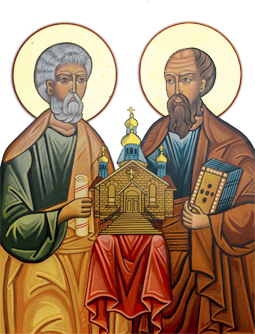 The feast day for the Apostles of Rome and early founders of the Church –Saints Peter and Paul– is on
 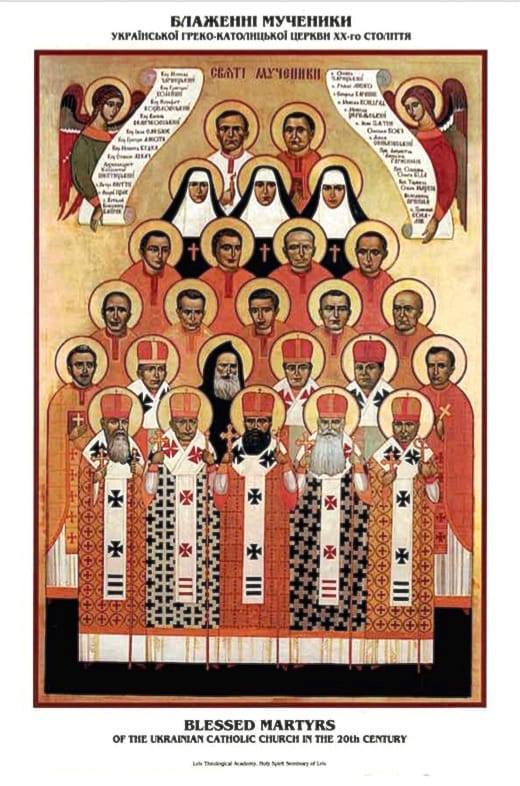 Today is the feast of the New Martyrs of Ukraine
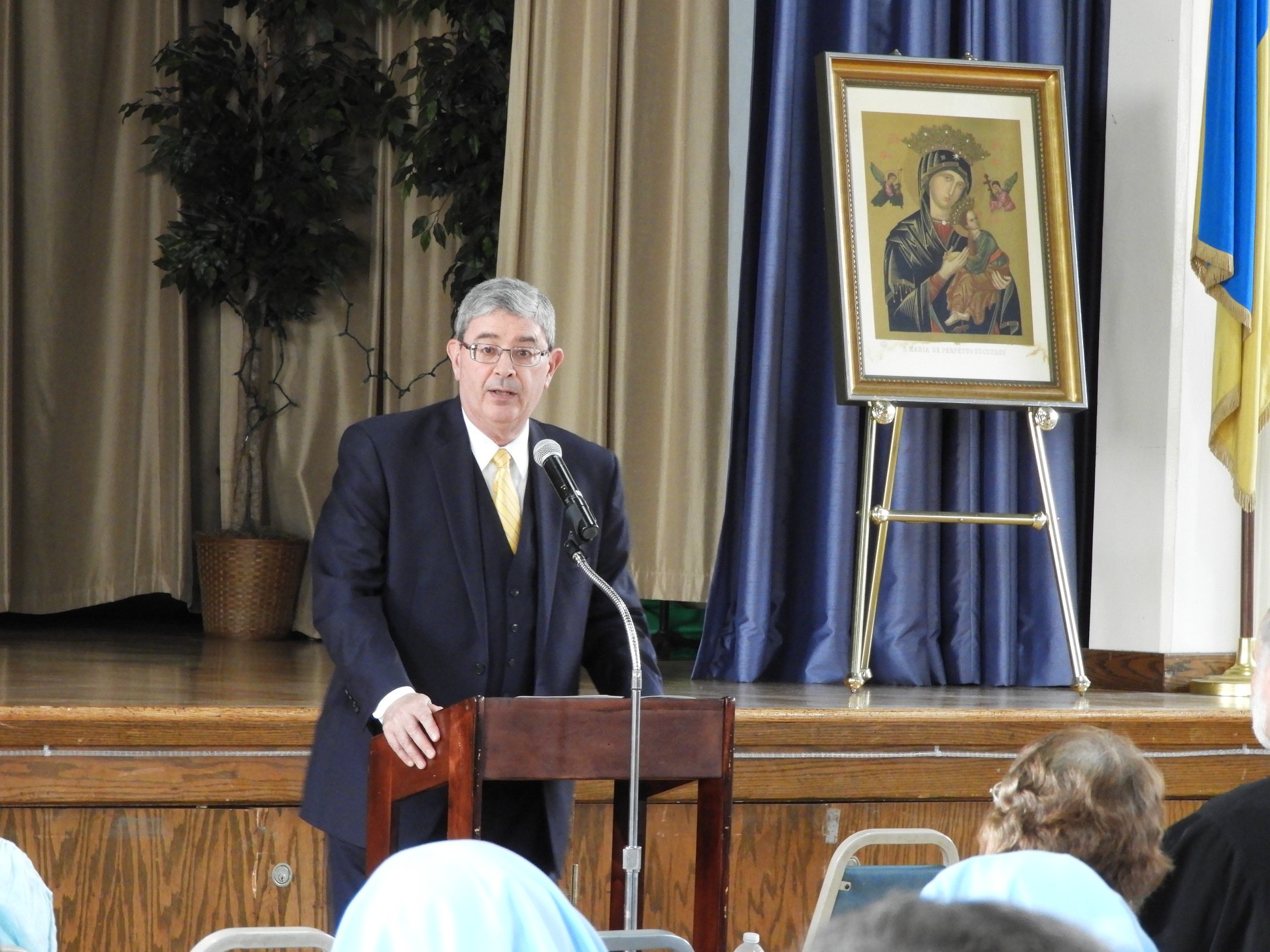 Below you will find the link to George Weigel’s presentation on June 2, 2019 at the Hall of the Ukrainian Catholic Catholic Cathedral of the Immaculate Conception, Philadelphia. The presentation was part of the enthronement ceremonies for Archbishop Borys Gudziak.
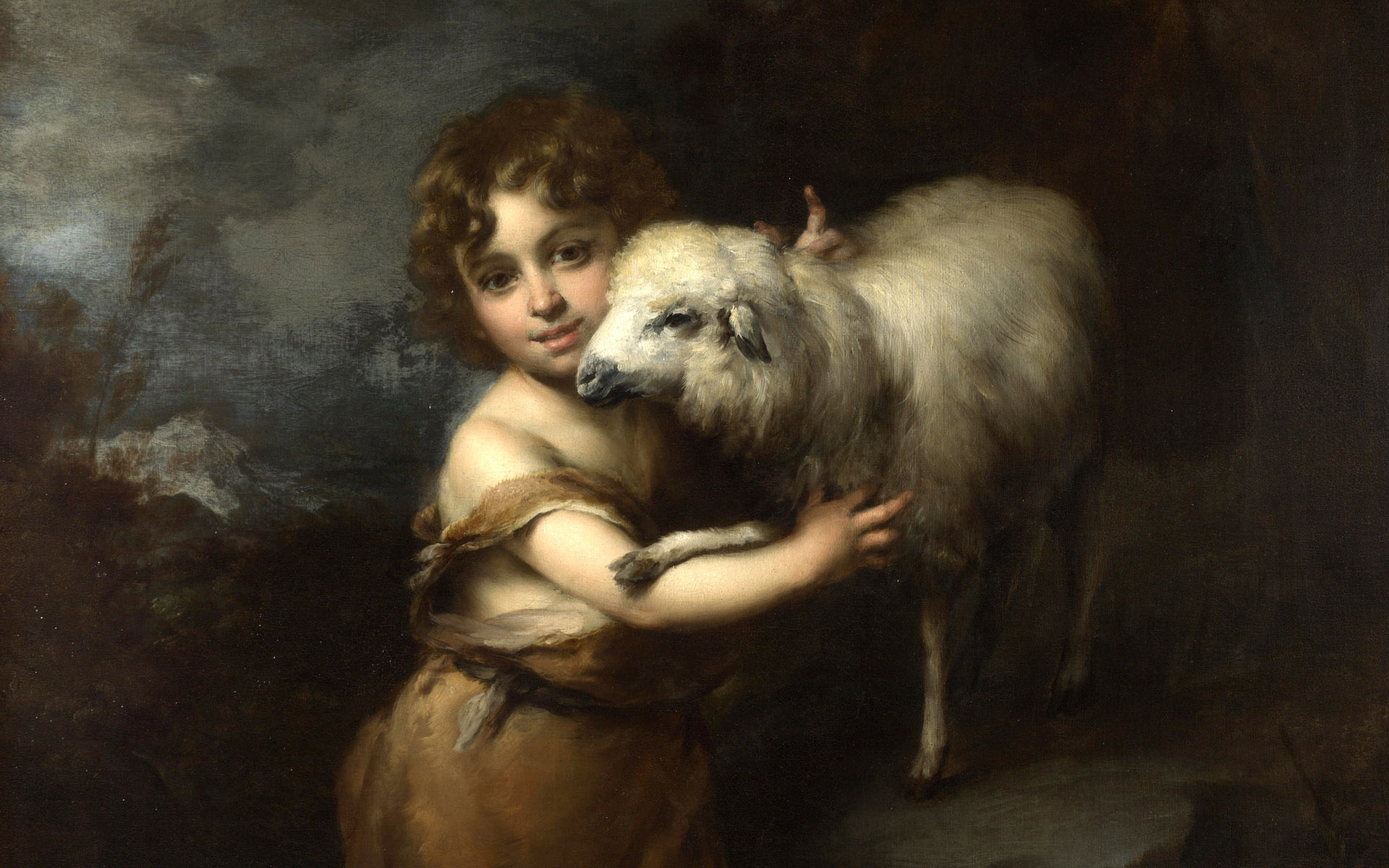 Pagan antiquity had festivals marking the winter and summer solstices. The Christian calendar absorbed these feasts, observing the birth of Christ in December on the shortest day, and that of John the Baptist in June on the longest day. From this day on, the sun slowly sinks from its zenith for six months, and begins its ascent again at Christmas. In the eyes of the Fathers, this solar rhythm is an expression of John’s words: “He must grow greater, while I grow smaller.”
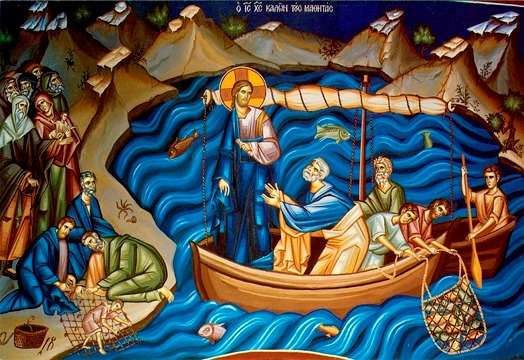 Read: Romans 2:10-16; Matthew 4:18-23