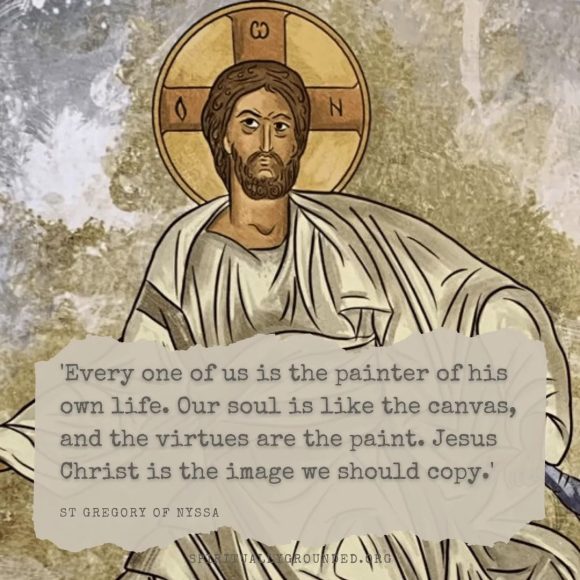
St. Gregory of Nyssa (335-395AD), whose memory we celebrate today – January 10th – was one of the great spiritual and mystical writers of the early Church. He was the younger brother of St. Basil the Great.
Born in Cappadocia (modern Turkey), he played a leading role at the Second Ecumenical Council that gathered in Constantinople in 381AD, which proclaimed the Holy Spirit as fully God and completed the writing of the Creed that we still confess in Church at every Liturgy as our personal statement of faith.
One of the books he’s best known for writing is “The Life of Moses” in which he uses the story of Moses’ life – his birth in Egypt, the crossing of the Red Sea, his wanderings in the desert and ascent of Mt. Sinai to encounter God and receive the 10 Commandments – as an image of the soul’s journey towards God in Christ through the Holy Spirit.
Gregory was also one of the first Christian voices to say clearly and unequivocally that slavery as an institution was inherently sinful and wrong. He believed that the institution of slavery in the ancient world violated human dignity, as all human beings are created in the image and likeness of God and are therefore of inestimable worth. He believed, on the basis of the Book of Genesis in the Bible, that freedom is an essential characteristic of human nature.
Human fulfillment, Gregory believed, consists of a life lived in the Light of Christ, becoming luminous, and offering that Light to everyone.
The fun thing about being Catholic is the diversity of liturgical calendars. We live in full communion in the Catholic Church thinking of the 5 liturgical families. This feast day gives us this perspective.