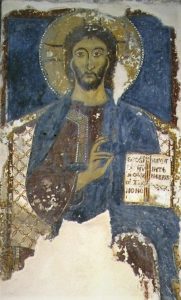
 The Sunday of the Pharisee and Publican is a fitting day for us to familiarize us with the Jesus Prayer. Father Iura spoke of the Jesus Prayer in today’s homily.
The Jesus Prayer
Alice Herro
Prayer, essential to Christian life, is one way we may communicate with God. It is the means by which we experience Jesus. Liturgical prayers conclude with the phrase, “through Jesus Christ, our Lord.” he name, Jesus, is at the heart of faith and prayer. It is through Jesus that heaven’s gates are open. It is in Jesus, through the Holy Spirit, that we ultimately return to the Father.
To early Christians, Jesus was not only a belief, but an experienced reality. Early Christians understood the healing, comforting power of the name, Jesus. From this understanding arose one of the earliest Christian prayers, the Jesus Prayer. It is simple, concise and direct, but rooted in the name of our Lord. It is an insistent prayer that can be said anywhere and anytime.
Jesus emptied Himself as His gift to us. Likewise, we return the gifts and empty ourselves as our gift to Him. How do we empty ourselves? How do we achieve this exchange of gifts?
Repeating the Jesus Prayer continuously is one way. With the Jesus Prayer, heart addresses Heart. Thus, the Jesus Prayer establishes communion between your heart and the Heart of Jesus. With practice, the Jesus Prayer will lead you into the Presence of Christ.
How does one pray continuously? A simple breathing technique will help sustain continuous repetition of the prayer:
~Inhale
~Lord Jesus Christ, Son of God, (invocation)
~Exhale
~be merciful to me, a sinner. (petition)
Many people recite the Our Father on the crucifix, the Jesus Prayer on all the beads, and the Glory Be on the crucifix. Although the Jesus Prayer is traditionally recited, you may say any prayer, word or group of words. Whatever leads you into the Presence of Christ is correct. Examples beside the Jesus Prayer: + Glory be to the Father, etc.; + Jesus; + My Lord and my God; + Lover of mankind; + Blessed be God (or any of the Divine Praises).
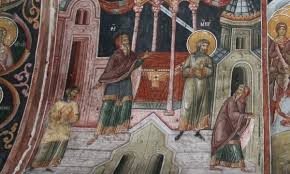 Sunday, January 24, 2021 is the Sunday of the Pharisee and Publican.
 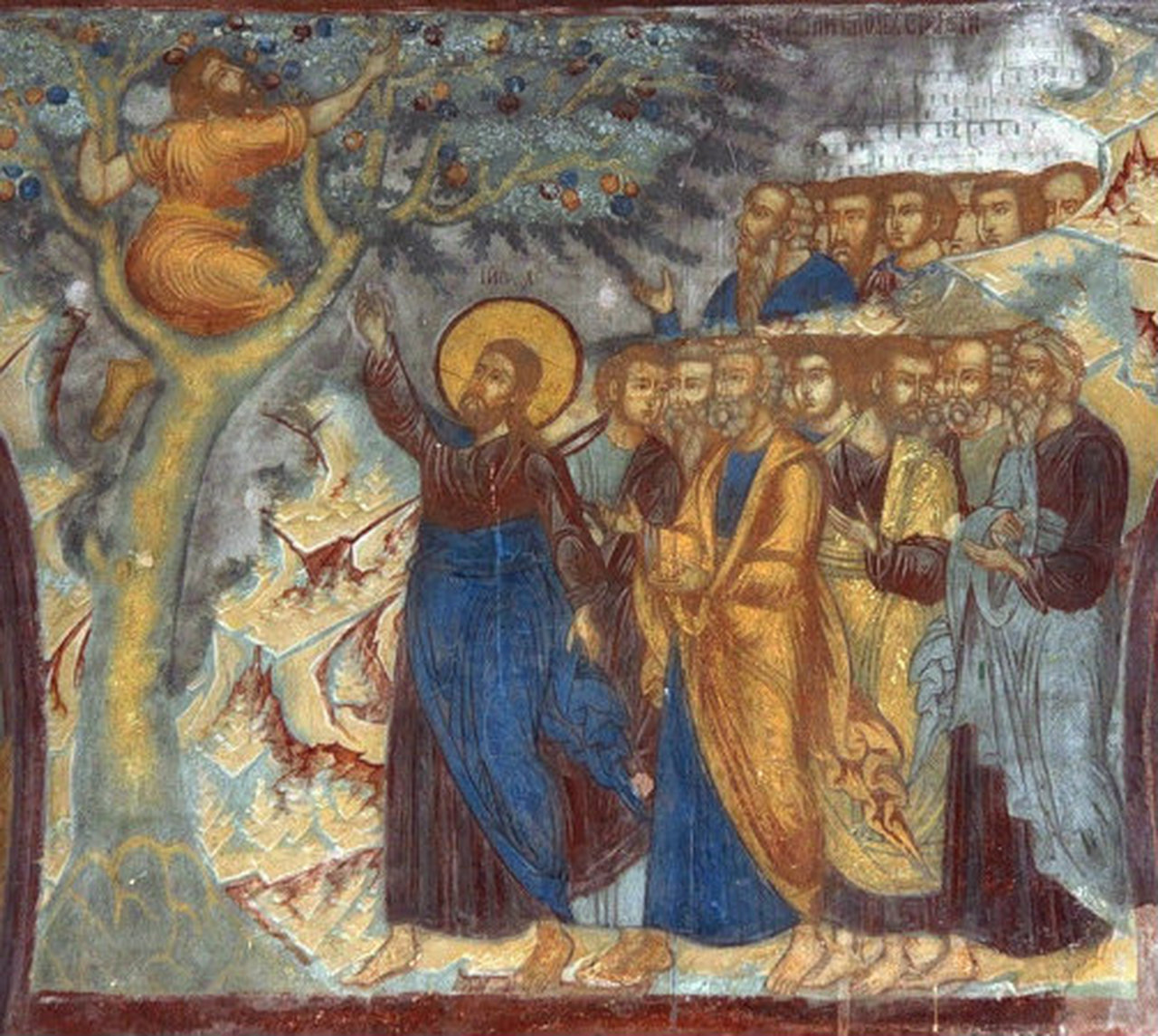 ”He entered Jericho and was passing through. And there was a man named Zacchaeus; he was a chief tax collector, and rich. And he sought to see who Jesus was, but could not, on account of the crowd, because he was small of stature. So he ran on ahead and climbed up into a sycamore tree to see him, for he was to pass that way. And when Jesus came to the place, he looked up and said to him, ‘Zacchaeus, make haste and come down; for I must stay a
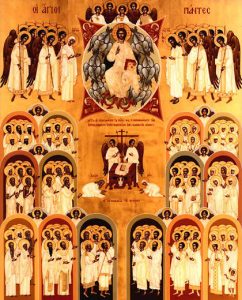 During the Great Lent there are special services held for the deceased members of a parish. These requiem services, known as “Sorokousty”, involves the reading of the individual names of deceased family members of parishioners.