Christ is among us!
1. WELCOME! New parishioners are always welcome in our parish. If someone wishes to join, please contact Father Iura Godenciuc at 203 865-0388 or our Financial Secretary Natalie Chermak at 203 468-0367.
2. AFTER DIVINE LITURGY: Dear parishioners and guests, after each Divine Liturgy, coffee and hard rolls are available in the church hall.
3. VIGIL LIGHT: This week vigil light is offered to God’s glory by Anya Myketey in memory of +Dmytro Vitovskyj.
4. FOOD DRIVE: Judy Ellis leads the mercy project which provides food items to the needy. A container is in our church vestibule for non-perishable food. This collection will be taken every week. Father Iura will distribute the food to those in need. Thanks for your support.
5. Sestrichi will have Corporate Communion on Sunday November 5th at the 9:00 a.m. Divine Liturgy, followed by meeting in the church hall. All are invited to attend.
6. K of C: The Knights of Columbus Blessed Metropolitan Andrey Sheptytsky Ukrainian Council will hold its next regular meeting on Monday, November 6, 2017 at 7:00 p.m. in the Church Hall. All men of parish are invited to attend to see what the Knights are all about and what they do and what you can do with them for your parish.
7. St. Michael’s Day: St. Michael’s day will be celebrated on November 12. On this day we will have only one (1) Divine Liturgy at 10:30 a.m. After the Divine Liturgy, we will have a dinner and short program. All parishioners are cordially invited to this celebration. Tickets will be available through Luba Dubno. Tickets are $20.00 for adults, $10.00 for youth between 14-18. Free for students Ridna Shkola, altar boys and for children under 12. We will be running a raffle. If you would like to donate any items to be raffled, please bring them to our church hall on Sundays before our feast day. Also we ask to donate cakes for a desert.
8. ROOF REPAIR FUND ROOF, CAPITAL IMPROVEMENT PLEDGES: Please consider the immediate as well as the long term repair capital improvement projects, roof and physical plant. (i.e., parking lot) that has been planned, both now and for the future and make a generous contribution to allow us to protect our property. The church hall roof which is 34 years old has developed major leaks. We have conducted a temporary patch to the hall roof to give us time to build up a Roof Repair Fund in a restricted account. As well as repairing the various roofs that needed treatment, especially the sacristy roof which had serious problems. These roofs have been repaired and must be maintained to prevent further water damage to our property and we cannot pay for them from regular weekly collection. Roof Repair Fund as well as Capital Improvement Fund envelopes as well as the long term Pledge forms are available in the vestibule of our church for your special sacrificial gift. Thank you for helping to keep our physical structures in good condition for our use today and for the next generation tomorrow.
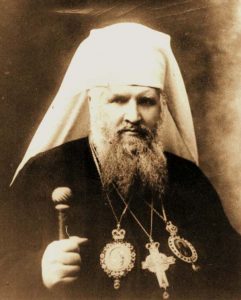 Remembering Metropolitan Andriy Sheptytsky, OSBM, today.
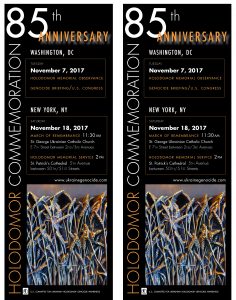 The 85th Anniversary of the HOLODOMOR Genocide will be commemorated Saturday, November 18.
 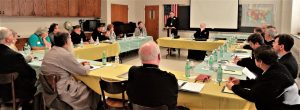 Ukrainian Catholic Patriarchal Catechetical Commission Meets with U.S. Bishops and Eparchial Representatives in Stamford, CT
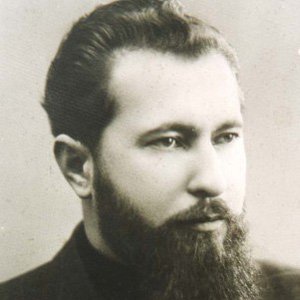 Blessed Theodore Romzha was bishop of the Ruthenian Catholic Eparchy of Mukachevo from 1944 to 1947.
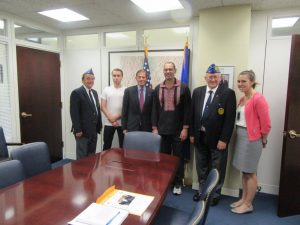 Carl Harvey and Myron Melnyk had a meeting last week with Senator Blumenthal who is the person, along with Senator John McCain that drafted this provision and got it passed in the Senate by a vote of 89 to 8. the purpose of the meeting was so that the 2 Ukrainian soldiers could presonally thank him for all that he has done for all of the veterans to get them the treatment that has “made thier life whole again”.
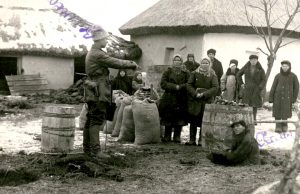 November is the month of commemoration to honor the victims of the 1932-1933 genocide-famine in Ukraine.