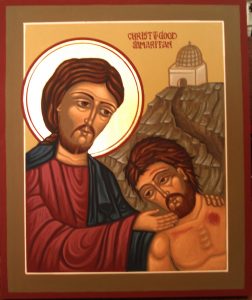
 Ephesians 2:4-10; Luke 10:25-37
This gospel must be read very carefully. Jesus tells a story to make a point. It is just a story, it didn’t happen. However, we get the point. The scholar of the law knew the basic message of faith. We must love God and we must love our neighbor as ourselves. Then he asked a question to justify himself. He saw a loophole in Jesus’ teaching. Yes, love your neighbor, but who is your neighbor? That is the problem. Jesus then tells a story in which those you would expect naturally to give help to the beaten man, the priest and the levite (in early Christianity, another name for deacon, one who gives service) pass the poor man without a thought. Who gives help?
It is the “other,” the heretics to the Jews, the hated Samaritan. He, the “other,” shows mercy. Whether this story happened or not is irrelevant. Jesus tells us that our neighbor may be someone we do not expect. Therefore, we cannot “justify ourselves” by prejudice and racism, by hating the other. This gospel preaches itself. When I was a young priest, the “other” in our church were blacks and Jews. Today they are immigrants and Moslems. And we, like the “scholar of the law,” are still racists. Racism is the ugly face of our church today. It blocks us from being “true-believing Christians. The scholar got the point, but he couldn’t say the hated word, “Samaritan,” but only “the one who treated him with mercy.”
Jesus responds “Go and do likewise,” that is, do not hate the other, but always show mercy and care for the other. This is what God does, saves us even if we are still in sin, “But God, who is rich in mercy, because of the great love he had for us, even when we were dead in our transgressions, brought us to life with Christ (by grace you have been saved), raised us up with him, and seated us with him in the heavens in Christ Jesus (Ephesians 2:4-6)”. God’s word is clear, but do we have eyes that do not see, and ears that do not hear?
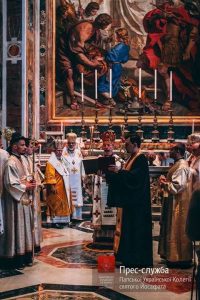 On Saturday, 11 November, there was a Divine Liturgy at St. Peter’s Basilica (Rome) over the tomb of St. Josaphat at the Altar of St. Basil the Great, as part of the festivities at St. Josaphat’s Pontifical Ukrainian College commemorating the 85th anniversary of its establishment and the Feast of St. Josaphat the College’s patron.rday, 11 November, there was a Divine Liturgy at St. Peter’s Basilica (Rome) over the tomb of St. Josaphat at the Altar of St. Basil the Great, as part of the festivities at St. Josaphat’s Pontifical Ukrainian College commemorating the 85th anniversary of its establishment and the Feast of St. Josaphat the College’s patron.
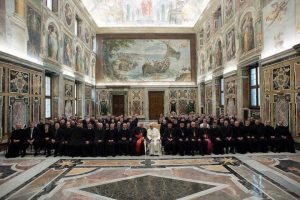 The Roman Pontiff, Pope Francis, welcomed the bishops, monks, priests and seminarians from St. Josaphat’s Seminary to celebrate the Seminary’s 85th anniversary.
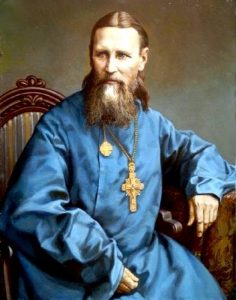 “Prayer is the lifting up of the mind and heart to God. From this it is evident that it is quite impossible for anyone to pray whose mind and heart are attached to anything carnal –for instance, to money or to honors –or who has in his heart passions such as hatred or envy for others, because passions usually contract the heart, in the same way as God expands it and gives it true freedom.”
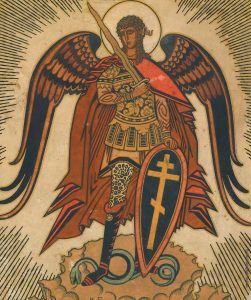 On November 8, the Church has the feast day for