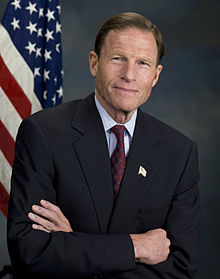
 Senator Blumenthal will explain in detail the recently passed Ukraine Security Assistance Initiative in the NDAA defense bill and his funding authorization proposal to aid Ukraine’s soldiers
Let’s support the Senator for helping Ukraine’s soldiers by thanking him in person at St. Michael’s Church Hall, New Haven, this Sunday, December 10, at 11:45 a.m. Local press will cover this event.
Please note that the 2018 National Defense Authorization Act (NDAA) more than doubled the level of U.S. support for Ukraine in the coming fiscal year. This legislation now awaits the President’s signature.
Below is an excerpt of Senator Blumenthal’s recent press release.
Aiding Wounded Ukrainian Soldiers: Blumenthal partnered with Connecticut’s Ukrainian-American community to secure a provision that creates a new funding authority for the treatment of wounded Ukrainian soldiers at Department of Defense (DoD) military treatment facilities. Ukrainian soldiers are currently able to come to America to be treated at military facilities when Ukraine cannot provide adequate care, but funding is not guaranteed and is often unaffordable. This legislation will provide a new route through the Ukrainian Security Assistance Initiative to cover medical care and associated costs at DoD treatment facilities.
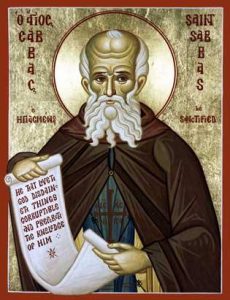 St. Sabbas lived from 439-532. His connection with the Feast of Christmas is that, like Christ, he was dedicated to God from the beginning of his life, imitating him from his birth Therefore, he was called “the sanctified one.” He entered the monastery at the age of eight. He was the founder of the St. Sabbas monastery in the area of Bethlehem, close to the place of our Lord’s birth. It was the Typicon (the Rule of Life for a monastery) of this monastery that became the model for the Byzantine order of the Divine Office.
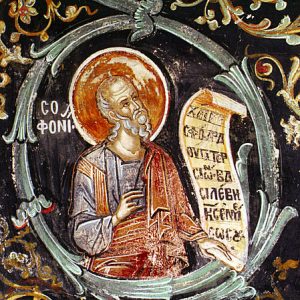 Today, the Byzantine and the Latin Churches liturgically recalls the Prophet of Zephaniah. In Hebrew, the name means “Yahweh has concealed.” Zephania is known in biblical study as the ninth of twelve minor prophets (taken in literary order). The Latin Church remembers the Prophet as the one who inspired the hymn, Dies irae. The Prophet gave his message to Jerusalem to be united in their worship and faith in the true God otherwise face God’s judgement, “the Day of the Lord.”
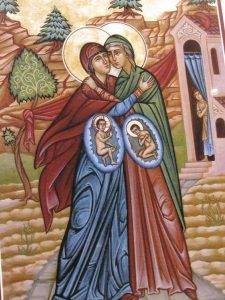 On the Fourth Sunday [that is, today] before Christmas, the Syrian Church remembers the Visitation of Mary to her cousin Elizabeth. In the Byzantine Church, there is no feast of the Visitation, though this gospel is the common gospel for Matins of Feasts of the Theotokos.
 Parish hosting new book signing
 Journey with female protagonist, Oksana as she shares her Ukrainian American experience. Thirty-eight pages of detailed color illustrations transport you through Oksana’s vibrant world filled with the customs, dance, food, craft, music and holiday traditions passed down from generations of Ukrainians. Oksana’s appreciation of her culture empowers children to celebrate their heritage.
 Bishop Peter Stasiuk, C.Ss.R. of Australia
 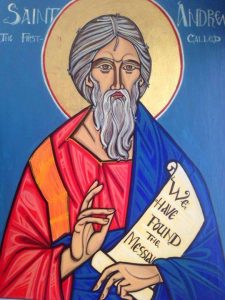 The feast of St. Andrew is the beginning of a new relationship of God with his people. He is the first-called, the first follower of Christ particularly as Rabbi, as Messiah and Savior. What does it mean to be Christian? It means to follow Christ without hesitation and without selfishness. This feast is truly a reflection of Christmas. Jesus is the first-born of the Father, the first-born of all creation, the new Adam, the re-Creator of the human race. Andrew is the first-called, but he is simply the forerunner of all who choose Christ, in a world that is hostile to Christ and his renewal. On this feast, we also begin the singing of Christmas stichera. At Psalm 140 of Vespers, we see that Bethlehem is filled with the fire of the Godhead, “Isaiah, dance for joy: receive the word of God. Prophesy to the Virgin Mary that the bush burning with fire will not be consumed by the radiance of our God.” At the Apostichera, we question the righteous Joseph, “Tell us, O Joseph: How is it that you bring the Maiden which you received from the Temple to Bethlehem pregnant?”
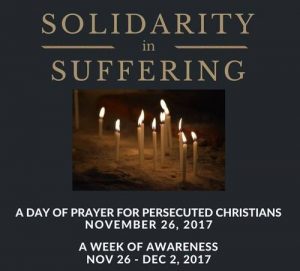 This coming week is dedicated to the welfare, physical and spiritual, of our sisters and brothers who are persecuted for their faith. Here are the texts for the Litanies to be used during the Divine Liturgy.