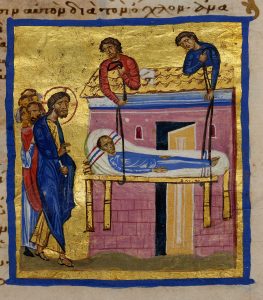
 There are six Sundays in the forty day celebration of the Resurrection (corresponding to the forty days until the Ascension as recorded in the Gospel of Luke). The first three Sundays have a gospel of the Resurrection and the second three a gospel with a baptismal theme. Sadly, in our day the baptismal theme of the Feast of Pascha has sometimes been eclipsed, But Paul’s Letter to the Romans makes that connection: “Or are you unaware that we who were baptized into Christ Jesus were baptized into his death? We were indeed buried with him through baptism into death, so that, just as Christ was raised from the dead by the glory of the Father, we too might live in newness of life. (Romans 6:3-4)” This Sunday, we see this is the story of the Paralytic Man. He was without friends, paralyzed for thirty-eight years and unable to get into the pool when the angel touched the waters. However, he finds a friend in our Lord, who asks, “Do you want to be well?” This gospel affirms the sacramental mystery of baptism: it is not the water touched by an angel that cures the man, but the ultimate power of healing comes from the Lord, in the waters of baptism touched by the Holy Spirit sent by the Lord.
The Gospel of John is truly a proclamation of the Son of God who sends the Spirit. It also affirms the meaning of baptism, which is the rejection of evil and the commitment to Christ. “Do you want to be well?” Jesus asks, and then the healed man proclaims Jesus as his Healer. Some of the liturgical meaning is lost in some modern Bibles who relegate verse 4 about the angel touching the water to a footnote, as a passage not found in the earliest versions.
“O Christ, cure my soul as you once cured the paralytic man, for it is under the influence of evil and sin. Guide me that I may walk in your paths.” (Ode 5, Matins)
“From time to time an angel of the Lord came to stir up the waters of the pool of the Sheepgate. One man recovered his health, but now an infinite number are saved by Christ through baptism.” (Ode 4, Matins)
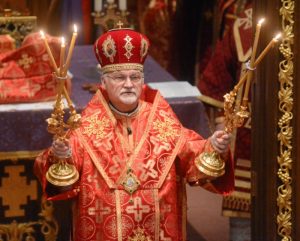 Pope Francis accepts the resignation of Archbishop Stefan Soroka today, Monday, April 16, 2018, of the Archeparchy of Philadelphia of the Ukrainians (U.S.A.) and appointment of the Apostolic Administrator seat vacant of the same archeparchy.
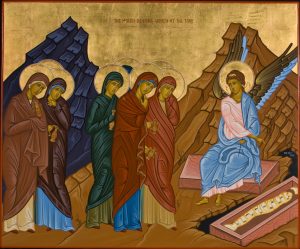 This Sunday presents us with the proclamation of the resurrection according to St. Mark.
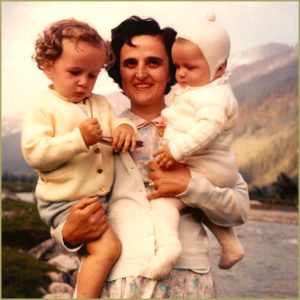 Join us for the St Gianna Benefit Dinner
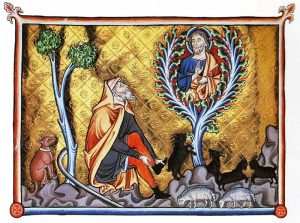 When God appeared to Moses, he first spoke to him from the burning bush. “There the angel of the Lord appeared to him as fire flaming out of a bush. When he looked, although the bush was on fire, it was not being consumed. So Moses decided, “I must turn aside to look at this remarkable sight. Why does the bush not burn up?” (Exodus 3:2-3). Later God was to tell Moses on Mount Sinai, “But you cannot see my face, for no one can see me and live” (Exodus 33:20). Indeed, the Epistle to the Hebrews declares, “our God is a consuming fire” (Hebrews 12:29).
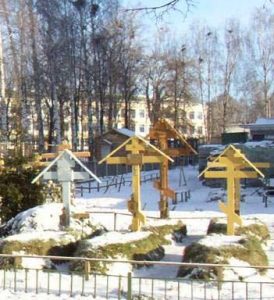 On the first free day after Bright Week [i.e., today], the Church traditionally remembers all those who have fallen asleep. Because of the hope of the resurrection, this is called the “