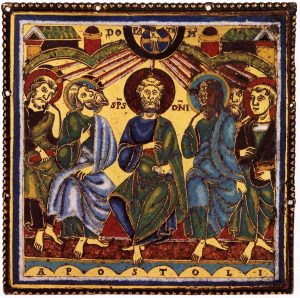
 Pentecost is the fiftieth day, “the last and greatest day of the feast.” In the New Testament, this story is told only in the Acts of the Holy Apostles (Acts 2:1-12). On this day, the Holy Spirit came upon the disciples in the form, “as of fire” and they were filled with the Holy Spirit. (Acts 2:3) From this event, some observations can be made:
-This fulfills the promise made by the risen Jesus in the Gospel of Luke, “And[behold I am sending the promise of my Father upon you; but stay in the city until you are clothed with power from on high.” (Luke 24:49)
-This was in the upper room, where the risen Lord came to the disciples through locked doors.
-There were twelve apostles, Matthias having been elected to replace the traitor Judas, as “a witness to [Jesus’] resurrection (Acts 1:22).”
-There were about one-hundred and twenty people present. Perhaps this was a symbolic number, for ten people were needed for a prayer group, hence, twelve apostles plus ten people for each apostle. The Spirit comes upon this gathering of communities.
-“As of fire,” the fire indicates the light of faith and the warmth of love.
-By the power of the Holy Spirit, the apostles are transformed from frightened followers to fearless witnesses. To be a Christian means to be a witness to life, to the Resurrection, this can be done only by the grace of God.
-Bystanders from every nation heard the apostles in their own language. The scripture does not tell us that the apostles spoke simultaneously in a variety of languages, but that the listeners heard them in their own language. What we appropriate, then, is the witness of the apostles to the resurrection and faith in Jesus. This is the wellspring of our faith, which we profess always in “one, holy, catholic and apostolic Church.”
-Can we accept this witness in our lives without fear.
-Today is seen as the birth of the Church, and the East sees it also as the beginning of ordination.
-Mary, the Mother of the Church, is present.
“We have seen the true light, we have found the true faith, and we worship the undivided Trinity, for the Trinity has saved us.”
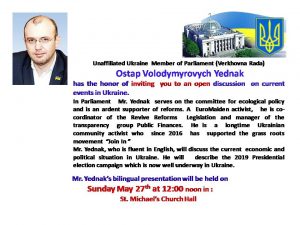 The St. Michael the Archangel Ukrainian Church community in New Haven welcomes Ostap Yednak, member of the Ukrainian Parliament (Verxovna Rada), who will speak on the current political, economic and security situation in Ukraine as well as the Presidential campaign currently underway.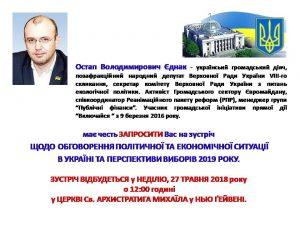
 The Resurrection and the Ascension are two separate concepts. This was known by the Gospel writers, particularly St. Luke. St. John also distinguishes the two, when Mary Magdalene meets the Risen Lord. Jesus says to her, “Stop holding [traditional: “do not cling to me”] on to me, for I have not yet ascended to the Father” (John 20:17). The Resurrection is the restoration to life of his human body, the Ascension is the glorification of Jesus, both God and man, at the right hand of the Father: “… the angels marveled at the sight of a human being more exalted than themselves. Today, the Father receives again in his bosom the one who was in him from eternity” (First sticheron at Psalm 140, Feast of Ascension).
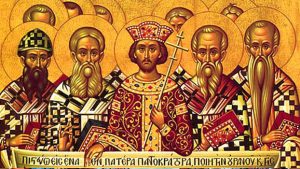 “Holy Father, keep them in your name that you have given me, so that they may be one just as we are” (John 17:11).
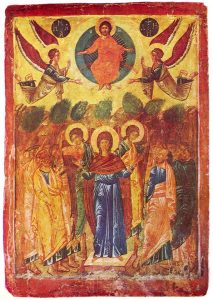 The ascension of our Lord into glory is the seal on his resurrection. Jesus taught Nicodemus, “No one has gone up to heaven except the one who has come down from heaven, the Son of Man” (John 3:13). St. Paul further explains that the ascension is the sign of his victory over the Hades, the kingdom of death, “What does ‘he ascended’ mean except that he also descended into the lower regions of the earth? The one who descended is also the one who ascended far above all the heavens, that he might fill all things” (Ephesians 4:9-10).
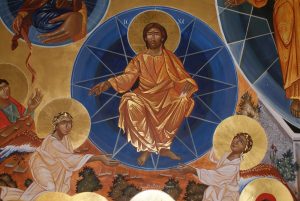 “…He ascended into heaven and sits at the right hand of the Father.”
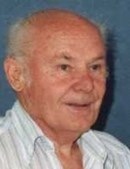 Peter Struk, 94, of North Haven, passed away peacefully on Thursday, May 3, 2018 at the MidState Medical Center, Meriden with his family by his side. He was the beloved husband of 70 years to Melanie Horn Struk. Peter was born on June 3, 1923 in Brzezany, Village of Litiatyn, Region of Galizien, Ukraine and was the son of the late Jacob and Chyma Slywka Struk. Peter was a member of the Carpenters Union Local #79, and worked as an installation technician for Atlantic Floor Covering in New Haven until his retirement. He was an avid gardener and a member of St. Michael’s Ukrainian Church for many years. Father of Peter H. (Victoria) Struk and the late Anna E. Struk. Grandfather of Peter A. and Sarah Struk.