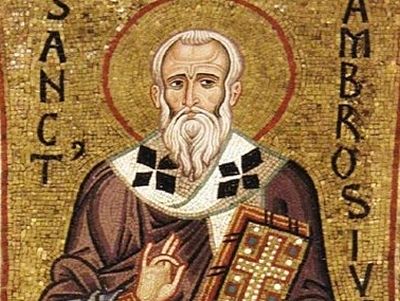
 St. Ambrose was the greatest Archbishop of Milan, at a time when it was the center of the Empire. He was elected bishop when he was still a catechumen and proved to be most competent—in administration as well as theology, and was a holy and sincere Christian. He had been a governor before and knew how “to talk to power.” When the Emperor Theodosius had 7,000 Thessalonians slaughtered over the assassination of their governor, he excommunicated him for his horrendous crime – and made it stick, bringing Theodosius to repentance.
As a theologian, he wrote about the incarnation of the Son of God: “And the Word was with God . This that he said is to be understood thus: The Word was just as was the Father; since He was together with the Father, He was also in the Father, and He was always with the Father. […] It is of the Word to be with the Father; it is of the Father to be with the Word, for we read that the Word was with God. So if, according to your opinion, there was a time when He was not, then, according to your opinion, He too was not in the beginning with whom was the Word. For through the Word I hear, through the Word I understand that God was. For, if I shall believe that the Word was eternal, which I do believe, I cannot doubt about the eternity of the Father, whose Son is eternal” (The Sacrament of the Incarnation of our Lord (III, 15-18, from the Vatican web site).
And again, Ambrose says, “He lay in the crib, that you might stand at the altar. He came to earth, that you might come to the stars” (Exposition of Luke 2.41).
Meditation by Archpriest David Petras
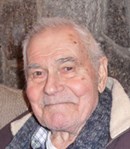 On Friday, November 30, 2018, Wasyl Jureczko fell asleep in the Lord. He was 92 and a longtime and faithful member of the Parish.
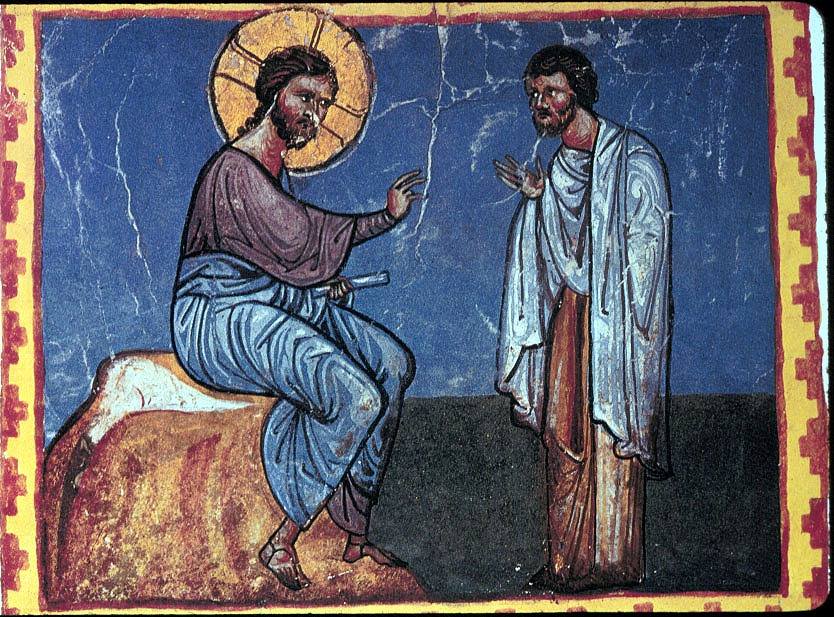 Read: Colossians 1:12-18; Luke 18:18-27
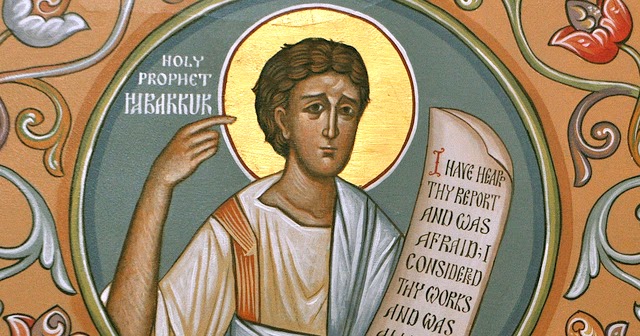 Today is the feast of the Holy Prophet Habakkuk. As you know, the Byzantine Church pays more attention, liturgically speaking, to the Old Testament prophets.
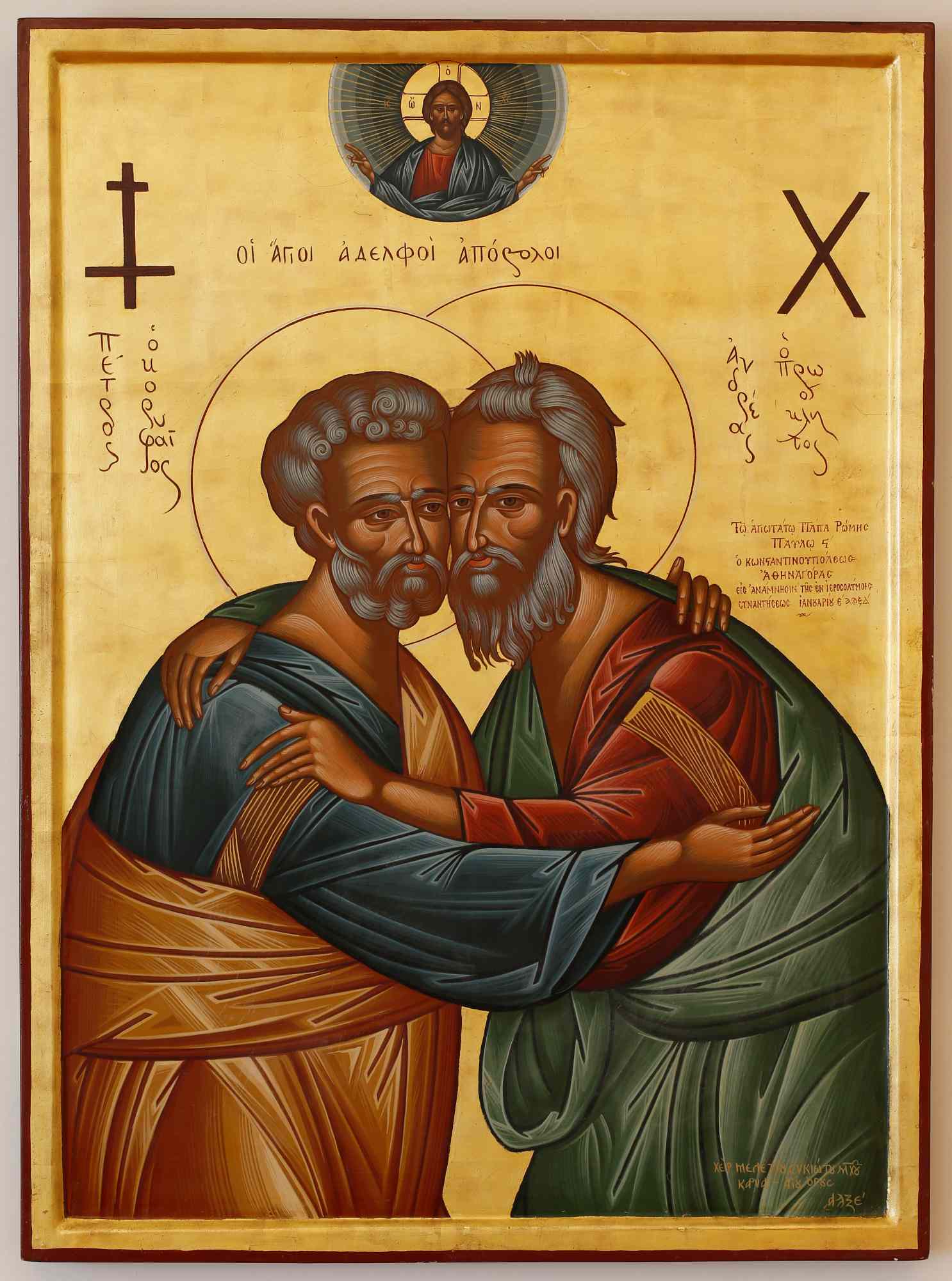 It is a legend, but also a symbol, that St. Andrew evangelized the town of Byzantium before it would become a great city. The symbol, therefore, is that Rome, the West, and Constantinople (Byzantium), the East are united in the fraternity of the two apostles, Peter and Paul. In our broken world, the Church is hampered in preaching the gospel by internal divisions. The Catholic and Orthodox Churches are heroically trying to re-unite to preach the one true Gospel of our Lord Jesus Christ. They are hampered by narrow-minded people in both Churches, who cannot see Christ living in the eucharist of these Churches. There is only one Christ in Holy Communion, and we do not partake of one Christ, and the other another Christ. There is only one Christ born of Mary in Bethlehem, whose Body we cannot divide. Now is the proper time for the one Church to proclaim the one Lord and Savior in the one holy Gospel. We must pray for unity this Christmas that we are not too late.