CT Pro-Life Conference, November 2nd, 9am-3pm at St. Paul High School, 1001 Stafford Avenue, Bristol, CT. Workshops/Speakers/Advocacy 101.
To register: $15 lunch included; $5 students with ID —visit www.ctfamily.org
CT Pro-Life Conference, November 2nd, 9am-3pm at St. Paul High School, 1001 Stafford Avenue, Bristol, CT. Workshops/Speakers/Advocacy 101.
To register: $15 lunch included; $5 students with ID —visit www.ctfamily.org
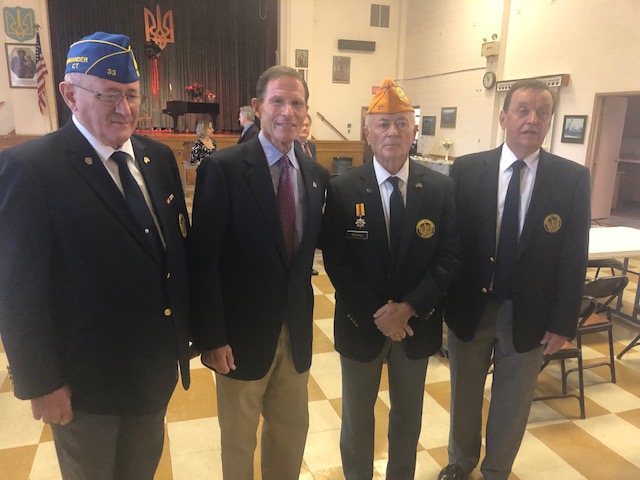 On Sunday, October 13th Senator Richard Blumenthal addressed the Ukrainian American community at St Michael’s Church hall in New Haven . His presentation focused on current efforts in Congress to support Ukraine. For the upcoming fiscal year $250 million is being authorized for defense -related assistance. Another $140 million is being allocated for non defense aid through USAID programs in the State Department. While he touched briefly on the House impeachment investigation he was clear that this political activity had no bearing on the ongoing support for Ukraine on Capitol Hill. In Congress Ukraine continues to enjoy strong bipartisan support.
Prior to the presentation our Veterans organization met with the Senator for an update on the Wounded Ukrainian Soldiers (WUS) program .
Media coverage of the event was exceptional with channel 8 WTNH (ABC) , channel 3 WFSB ( CBS) and FOX 61 camera crews present . In addition both the New HAVEN Register and the Hartford Courant covered the event.
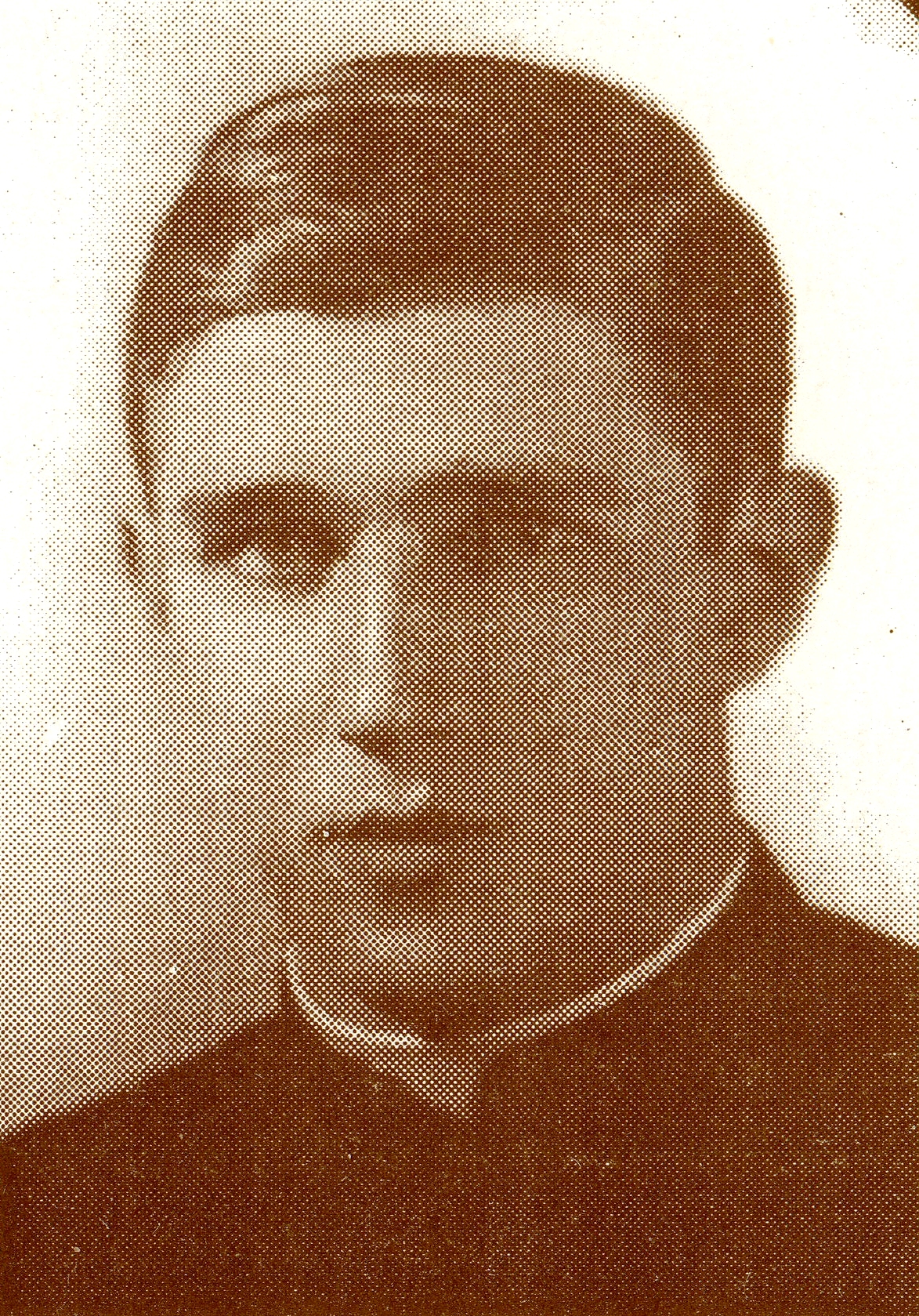 Today, on the liturgical calendar the UGCC Church liturgically remembers Blessed Roman Lysko who died on this date following torture and starvation in 1949. He was born on 14 August 1914 in the Horodok, Lviv District, Ukraine.
Father Roman was a married priest and pastor. He was ordained priest by Metropolitan Sheptytsky. The NKVD called Father Roman cray for signing the Psalms aloud in prison.
Pope St. John Paul II recognized that Father Roman died as a martyr, and beatified him on 27 June 2001.
Blessed Roman Lysko, pray for us.
Glory to Jesus Christ!
Sunday, 10/13, 18th Sunday after Pentecost —Of the Fathers of the 7th Ecumenical Council
9:00 a.m. +John Chalupa requested by Paul Zalonski
10:30 a.m. For our parishioners
Epistle: 2 Corinthians 9:6-11
Gospel: Luke 8:5–15, Tone 1
Monday, 10/14, Our Venerable Mother Paraskeva of Ternovon
9:00 a.m. No intention for the Divine Liturgy
Tuesday, 10/15, Our Venerable Father Euthymius the Younger
9:00 a.m. No intention for the Divine Liturgy
Wednesday, 10/16, The Holy Martyr Longinus the Centurion
9:00 a.m. No intention for the Divine Liturgy
Thursday, 10/17, The Holy Prophet Hosea; the Venerable-Martyr Andrew of Crete
9:00 a.m. No intention for the Divine Liturgy
Friday, 10/18, The Holy Apostle and Evangelist Luke
9:00 a.m. +Petro and Anastazia Malyk requested by Kateryna Szymkiw
Saturday, 10/19, The Holy Prophet Joel
9:00 a.m. +Wasyl Dobrianskyj requested by Kateryna Szymkiw
Sunday, 10/20, 19th Sunday after Pentecost —The Holy Great-Martyr Artemius
9:00 a.m. +Father Edward T. Oakes, S.J. requested by Paul Zalonski
10:30 a.m. For our parishioners
Epistle: 2 Corinthians 11:31-12:9
Gospel: Luke 16:19-31, Tone 2
Christ is in our midst!
This week’s vigil light is offered to God by Nina Baker and family in memory of Natalie Cybriwsky.
A special thank you from Mrs. Sophie DeCarlo to all those who helped her to celebrate her 102nd. birthday. She received 33 Birthday Cards and enjoyed reading every one of them. Many years!
Congratulations to Mr. Bohdan Sowa and the Sestrechi on the success of last week’s Lasagna Dinner. Given in memory of Mrs. Maria Sowa, the dinner was truly outstanding and enjoyed by all who attended. Many years!
Pierogi Saturday has been changed in November to the 16th. Previously it was the 23rd.
Post #33 of the Ukrainian American Veterans invites everyone to a community presentation by Senator Richard Blumenthal Sunday, October 13th at 12:00 noon in St. Michael’s church hall, 569 George St., in New Haven. Senator Blumenthal is a leader in the U.S. Senate for securing support for Ukraine in its struggle against Russian aggression. He will discuss recent development in Ukraine and Congress as well as his support for wounded Ukrainian soldiers. All are invited to participate and to support the Senator in his efforts.
Ukrainian American Veterans will hold our National Convention here in New Haven Thursday, October 31st thru Saturday, November 2nd. We expect 140 attendees at the convention and we are asking for your help to make this event a success. Please contact Post Commander Carl Harvey for further details and how you can help. Thank you!
St. Michael’s Day will be celebrated on November 24th. On this day we will have only one (1) bilingual Divine Liturgy at 10:30 a.m.. After the Divine Liturgy, we will have a dinner and short program. All parishioners are cordially invited to this celebration. Tickets are available through Miss Luba Dubno. Tickets are $25.00 for adults, $10.00 for youth between 14 and 18. Free for students Ridna Shkola, altar boys and for children under 12. We will be running a raffle. If you would like to donate any items to be raffled, please bring them to our church hall on Sundays before our Feast Day. Also we ask for donations for dessert.
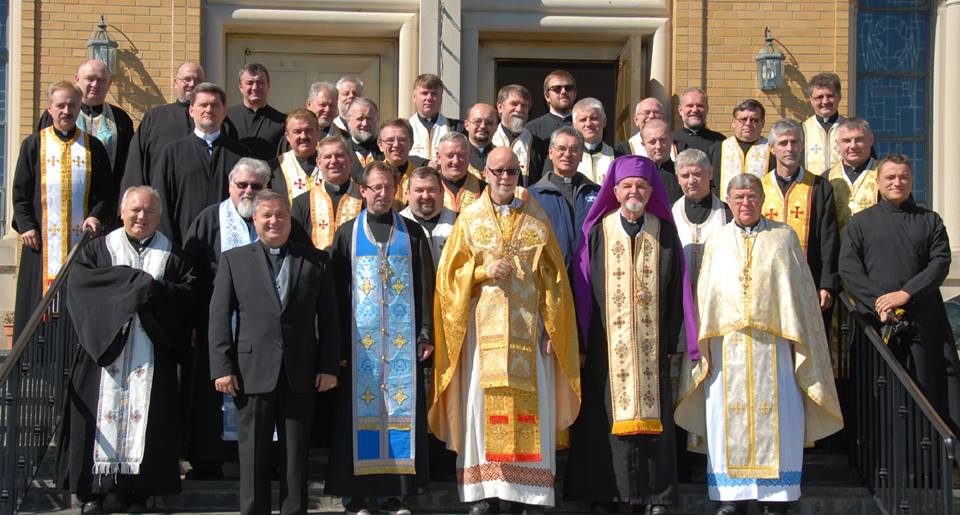 The Stamford Eparchial Clergy Fall Days, 2019
Let us pray for our clergy.
 Today, October 8th, is National Pierogi Day. Don’t forget that the next Pierogi Saturday is October 19.
More info on St Michael’s Pierogi may be found here: https://stmichaelukrainian.org/pierogies/
Who’s patron saint of pierogi makers?
My bet is Walter our fearless leader.
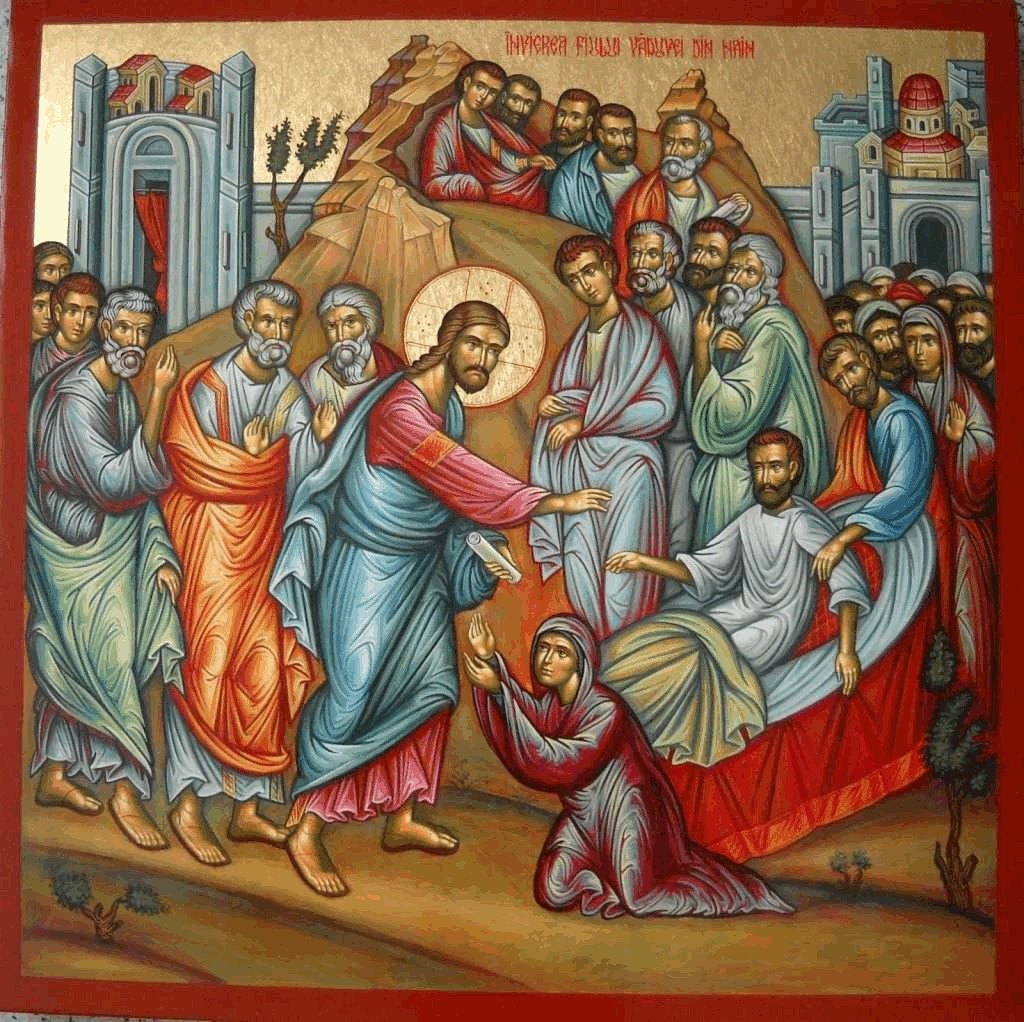 Seventeenth Sunday after Pentecost, 2019
Our Lord is the Life-giver. The gospels record Jesus’ presence at baptisms and weddings, but never at a funeral, for death cannot remain in the presence of the Giver of Life.
Today Jesus comes upon a funeral in the village of Nain, it seems almost accidently and by chance, though nothing ever happens totally by chance. Jesus stops the funeral and raises up the young man, the only son of a grieving widow. The Gospel continues the theme of last Sunday, “Be merciful, as your heavenly Father is merciful, for today Jesus raises the young man, “When the Lord saw (the widow), he was moved with pity for her and said to her, ‘Do not weep.’ He stepped forward and touched the coffin; at this the bearers halted, and he said, ‘Young man, I tell you, arise!’ (Luke 7:13-14)” Here Jesus has compassion on the love of a mother for her child.
Today is a prayer for a mother’s love, especially for mothers pregnant with unborn children, that they may bring them to life. Today shows us also the God’s giving of life is not only for the future world but begins here and now. As we receive Communion, the priest says, “The servant of God receives the precious Body and Blood of our Lord Jesus Christ for the remission of sins and life everlasting.” We are in the presence of the Lord, therefore in the presence of life. Jesus teaches, “I came so that they might have life and have it more abundantly. (John 10:10)
Meditation by Archpriest David Petras
#ByzantineCatholicNewHaven