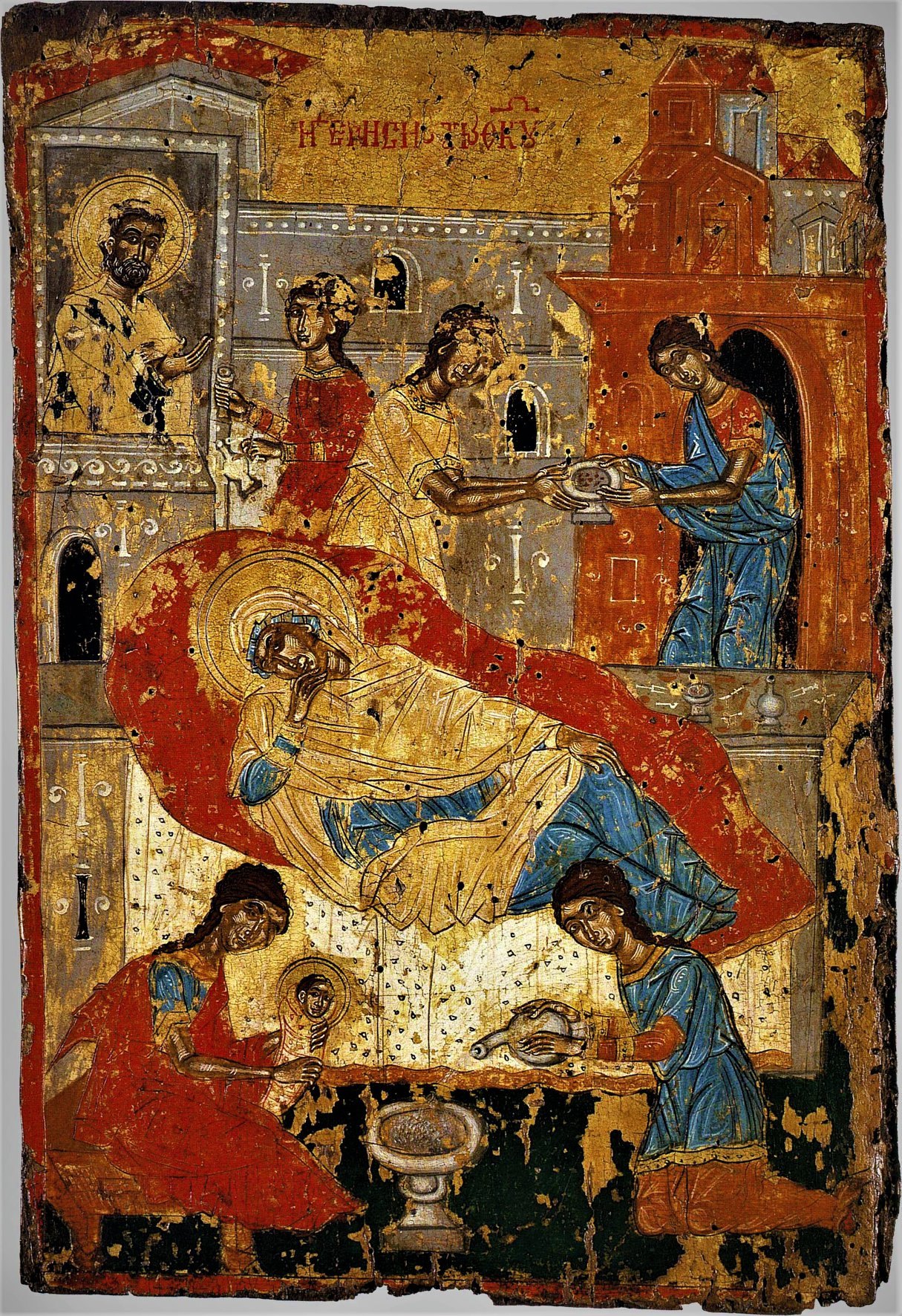
 “By Your Nativity, O Most Pure Virgin, / Joachim and Anna are freed from the reproach/disgrace of barrenness (ὀνειδισμοῦ ἀτεκνίας); / Adam and Eve, from the corruption of death. / And we, your people, freed from subjection to sin (ἐνοχῆς τῶν πταισμάτων), celebrate and sing to you: / The barren woman gives birth to the Theotokos, the nourisher of our life!” (Byzantine Kontakion-hymn of the Nativity of the Theotokos)
The services of the great feast of the Nativity of the Theotokos, celebrated this Sunday (NC), are full of difficult theological concepts, like “corruption of death” and “subjection to (liability for) sin,” referring to our human state before Christ. Even more perplexing, perhaps, is the mention of Christ annulling our “curse” in another well-known hymn of the feast: “By annulling the curse (καὶ λύσας τὴν κατάραν) He bestowed a blessing, by destroying death, He gave us eternal life,” it says in the Troparion-hymn. What does it all mean?
I am given to understand the meaning of these terms first and foremost through a story. It is the personal story of Saints Joachim and Anna, and their “disgrace of barrenness” or “childlessness.” And here’s what their story teaches me: Before God intervened and stepped into our picture, they, like me, were unable to “live” to their full potential. Without the Source of Life stepping into our nature, separated from Him through “sin” (a loss of focus), and a “curse” (a loss of “blessing” or “ev-logia,” a “good word”), we are cut off from His creative energies, which allow us to become truly productive and truly human. He becomes human, through His Most-Pure Mother, so that I can become my true self, freed from paralyzing “barrenness” and capable of giving birth to His word in my world.
So today “the barren woman gives birth,” as He bestows His same blessing on an ever God-Bearing Church. Let me embrace this blessing, by the intercessions of the Blessed Among Women, amen!
Meditation by Sr. Vassa
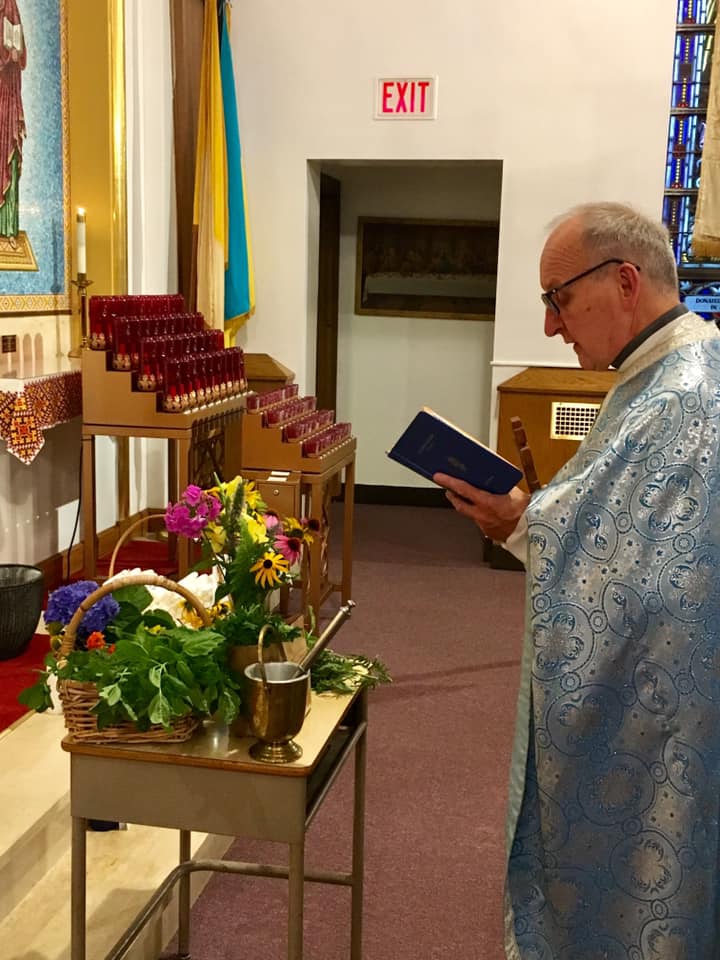 Father Paul Luniw served the Divine Liturgy and blessed flowers and herbs for the Dormition Feast. Father Stepan did similarly at the morning Liturgy.
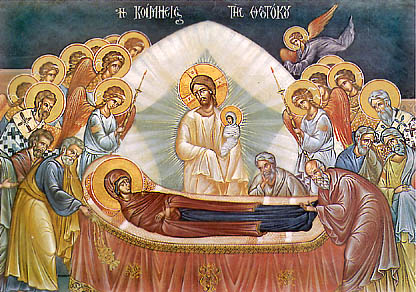 On Thursday, August 15, the Dormition of our most Holy Lady and the Mother of God and Ever-Virgin Mary, a holy of LOVE, the Divine Liturgy will be served at:
 “Father,” someone once asked their priest, “I have a difficult time observing the Dormition Fast. What should I do?”
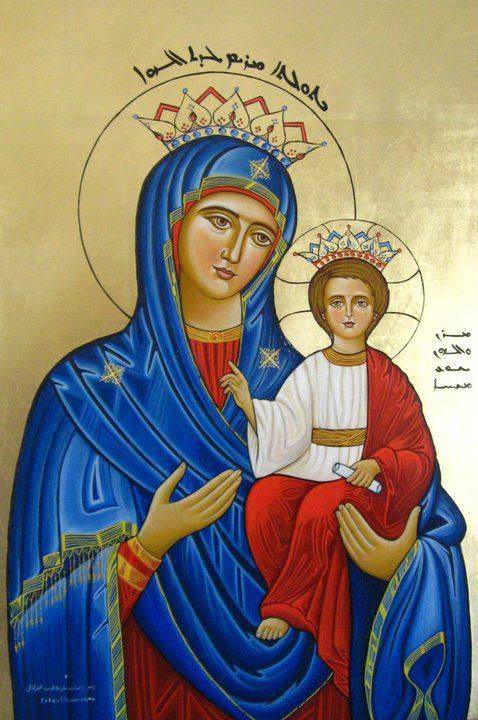 The month of May is traditionally known on as the Month of Mary. The Church holds Mary in the highest esteem; she is venerated but not worshipped by Catholics and Orthodox. A Syrian Father, St Ephrem, –the Harp of the Holy Spirit– the fourth century hymnographer, theologian and deacon as something to offer about the Mother of God.
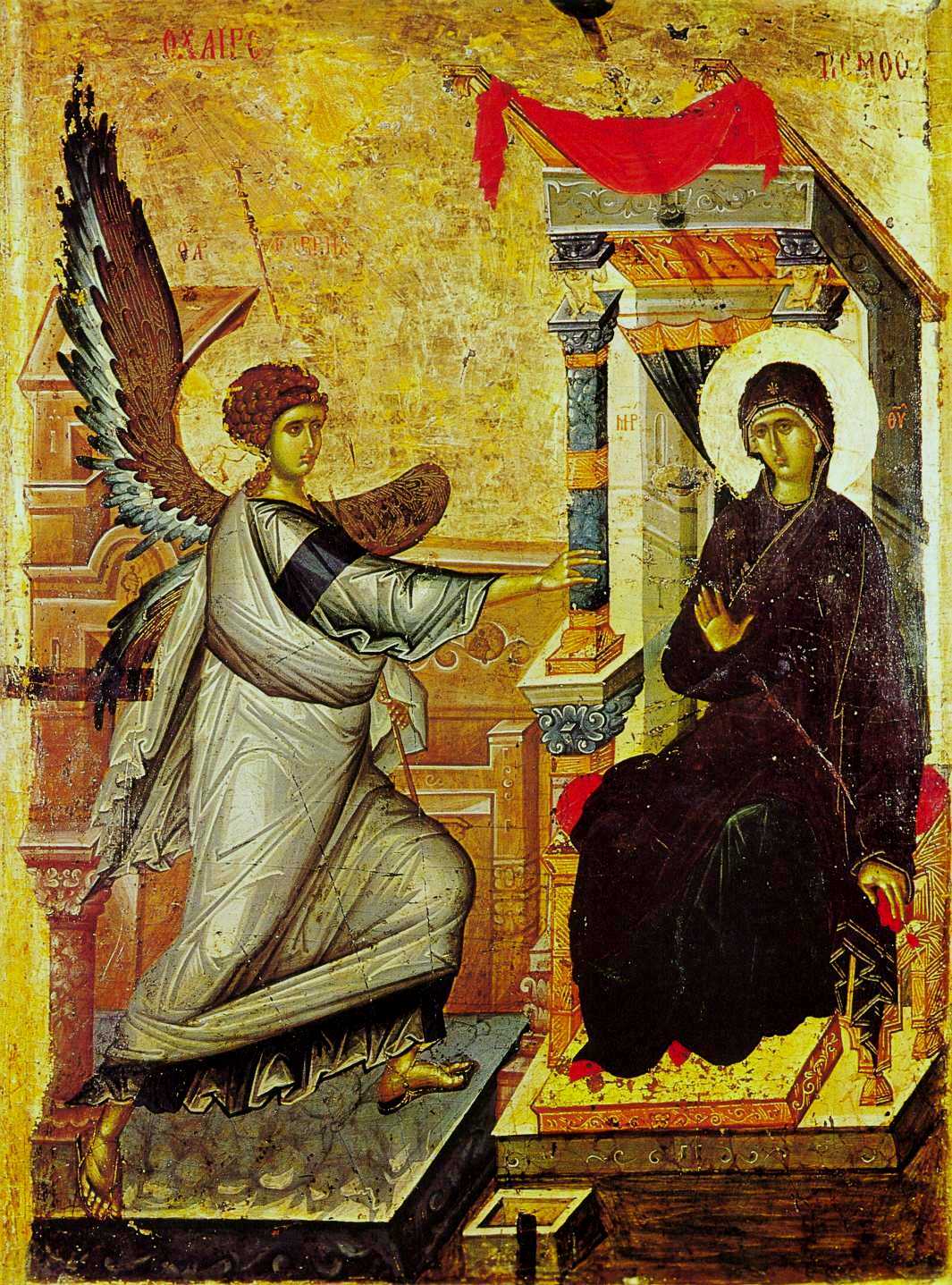 Today the Church celebrates summit of our salvation.
 The conception of the all-holy virgin Mary in the womb of Anna is celebrated on December 9 in the Byzantine tradition, for a natural reason, that the Eastern ancients thought a girl was in the womb one day less than a boy. However, in the Ruthenian Church in America [and the Ukrainian Church], the feast is now celebrated together with the Roman Church on December 8, nine months before her birth on September 8, because she is the patron of the United States.
 On
On 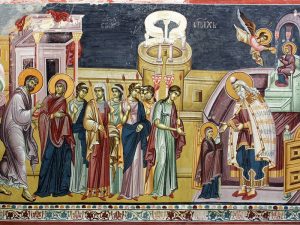 “Seeing the entrance of the pure one, angels marveled in wonder how the Virgin could enter the holy of holies.” (Refrain to Irmos 9, on the feast of the Entrance of the Theotokos into the Temple)