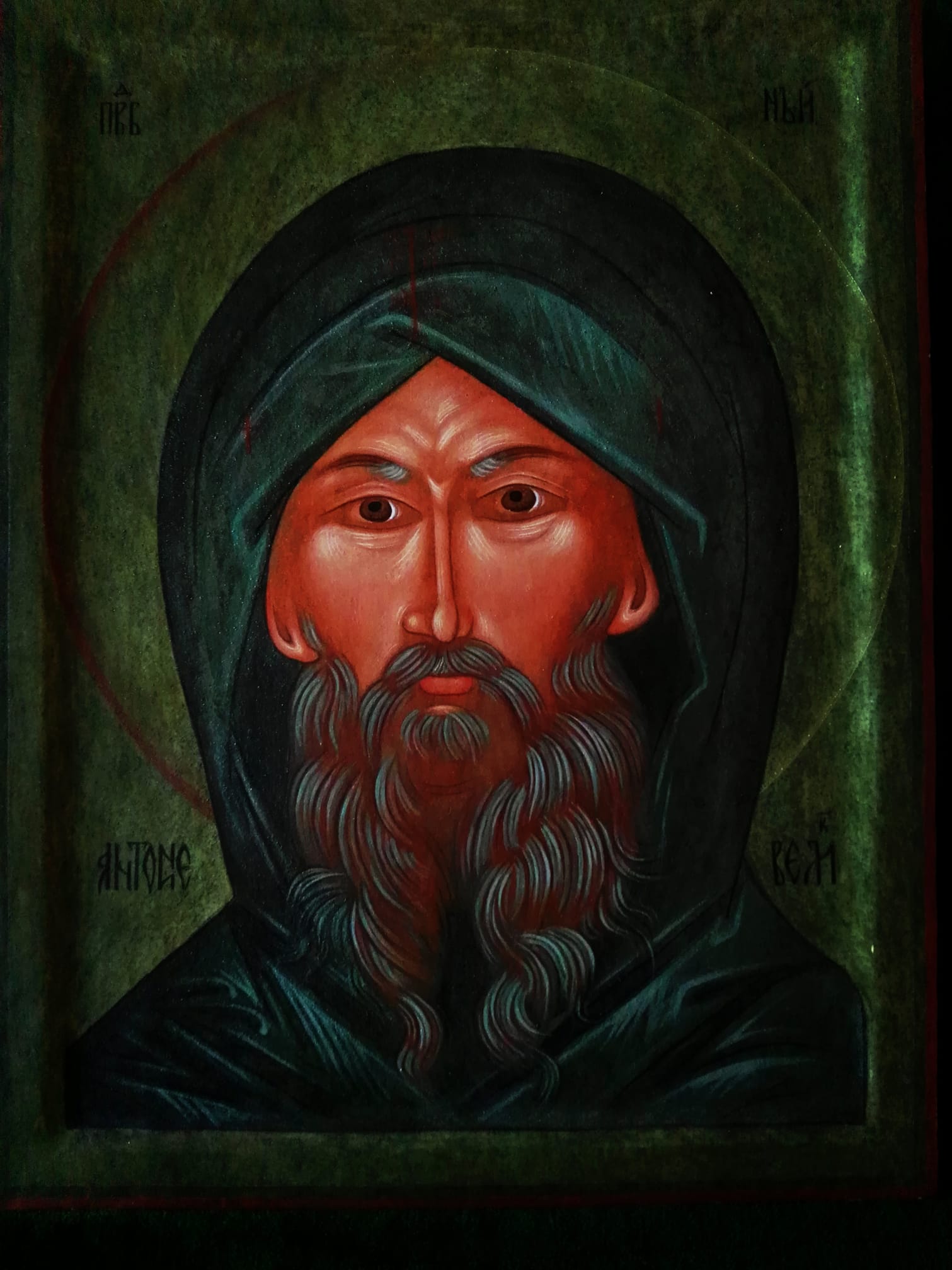
 St. Anthony the Great, also called St. Anthony the Abbott (though he was a hermit) and St. Anthony of Egypt is commemorated on January 17. He is identified as the founder of desert monasticism, though the story of his life, particularly how he met St. Paul of Thebes, who preceded him into the desert, is a study of the search for Christian perfection. This story tells how he heard the gospel about the rich young man, to whom Jesus said, ““If you wish to be perfect, go, sell what you have and give to the poor, and you will have treasure in heaven” (Matthew 19:21). When Anthony heard this gospel, he immediately divested himself of all his possessions and went into the desert to seek Christian perfection. This is really the calling of all Christians, as Jesus commanded, “Be perfect, just as your heavenly Father is perfect. (Matthew 5:47)” For this we are baptized, that we might seek Godly perfection.
St. Anthony imitated Christ when he heard this gospel, and just as Jesus went out into the desert after his baptism by John, in order to foil the wiles of Satan, so, too, does Anthony go to the desert to conquer the evil passions exploited by the temptation of the devil. The monastic calling is an intensification of our baptismal calling, the renunciation of all worldly concerns to find perfection in the grace of Christ.
Therefore, in Eastern theology, consecration as a monastic (monk or nun) has been deemed a sacramental mystery, not a separate mystery, but as part of the mystery of repentance. In a similar way, Holy Orders and Marriage are also considered sacramental mysteries, because they confirm the baptismal calling in a particular vocation of life. St. Anthony, then, is a model for our life in Christ through baptism, which is called enlightenment, the perfection of the wisdom that leads us to life.
We pray, then, to our Holy Father Anthony, “Having clearly received immortality and eternal life, pray for my darkened soul to be enlightened by the light of grace, so that I may worthily praise you; for you bear the Three-fold Light, O Father Anthony!” (Matins, Ode 1).
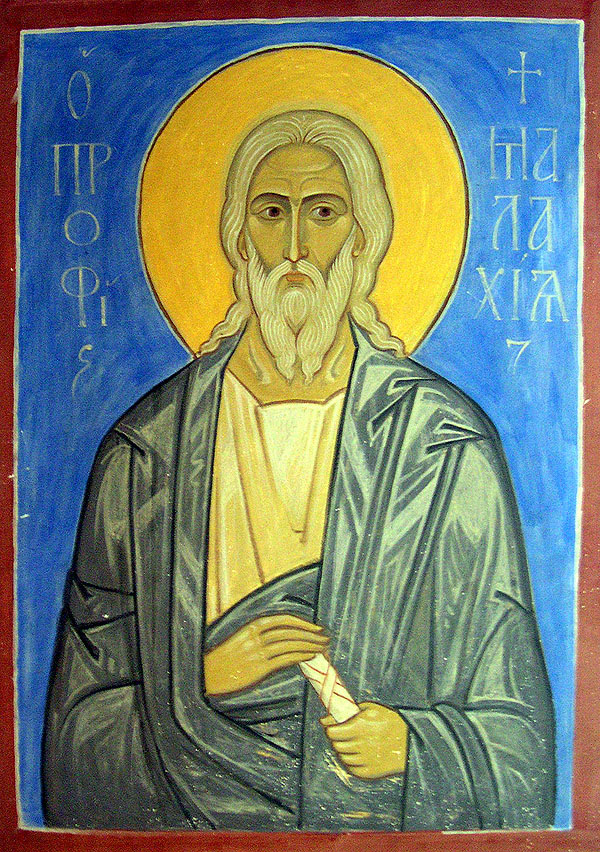 The holy prophet, Malachi. Second day of the prefestive period.
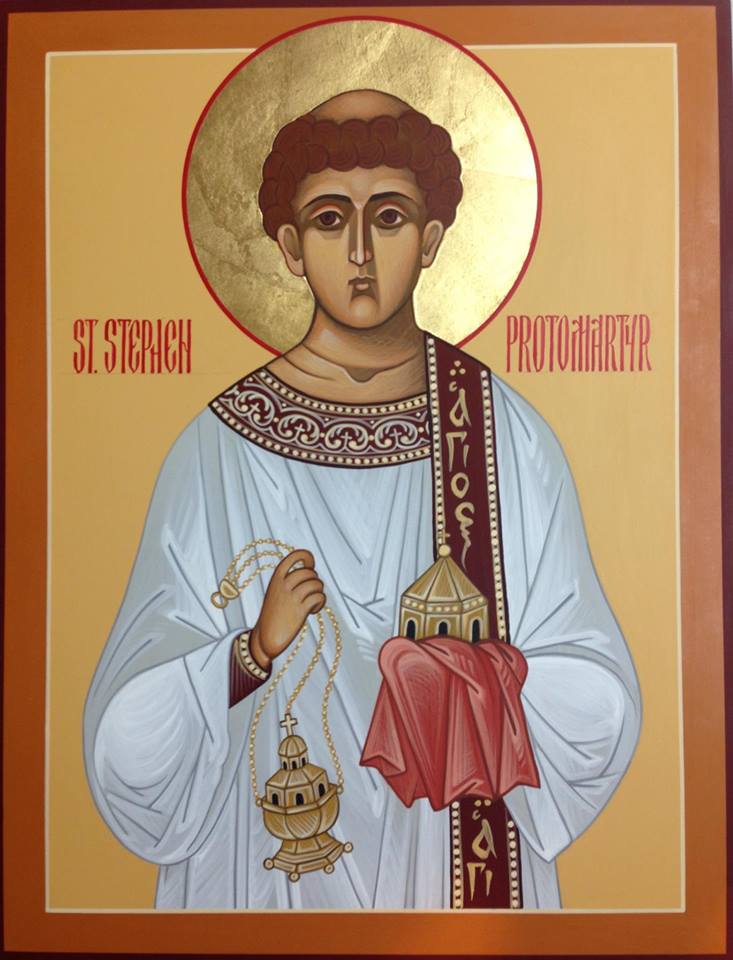 [In the Byzantine Church today is the feast day for St. Stephen while in the Latin Church December 26 is the day on which Stephen is liturgically commemorated.]
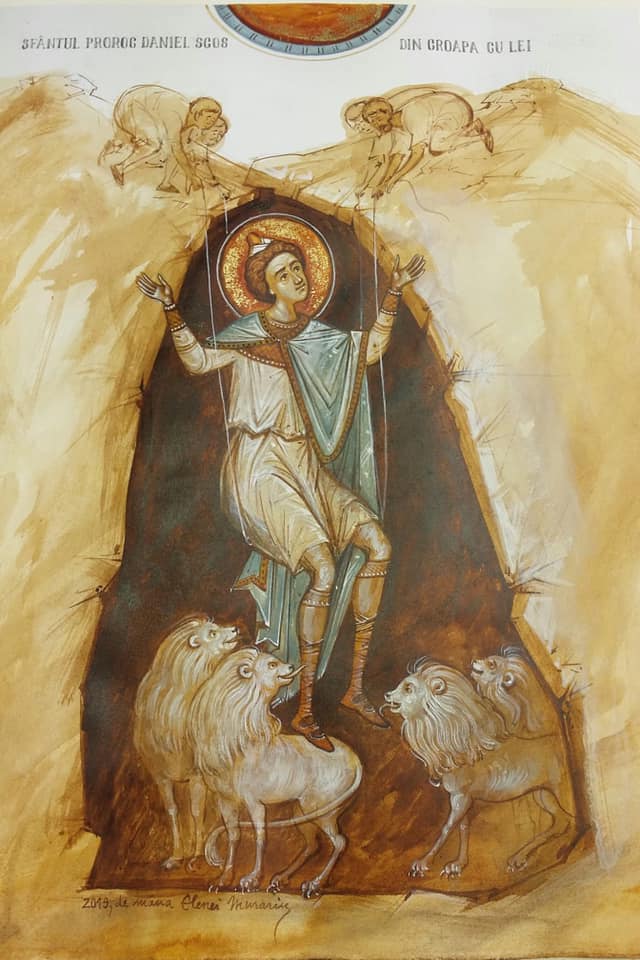 The Feast of the Prophet Daniel and the Three Holy Children [in the fiery furnace] has always been closely connected with Christmas. Proper for them are found on the two Sunday before Christmas and today we sing, “Come, O faithful, let us celebrate the forefeast of the birth of Christ; offering a spiritual canticle by way of a star. Let us join the Magi and shepherds in their hymns of praise: Behold, the Savior has come from a virgin’s womb to call back to himself the whole human race.”
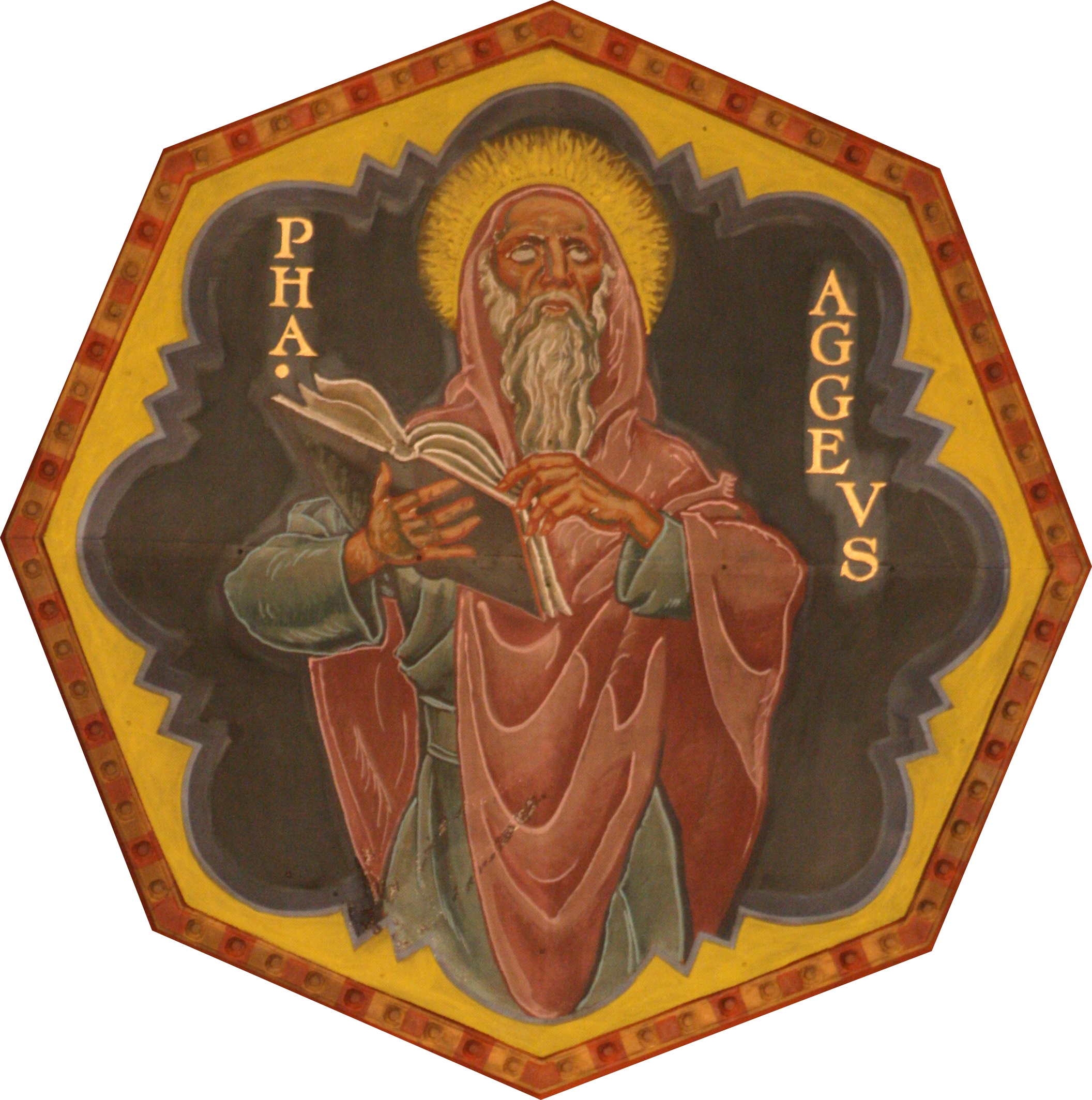 The prophet Haggai, in 520 B.C., preached that the temple must be rebuilt for the sake of the faith of the people. In this way he foreshadowed that Jesus, the Messiah to come, would be the Temple of the New Covenant in his body. His birth, then, is the completion of God’s promise to make his dwelling among his people.
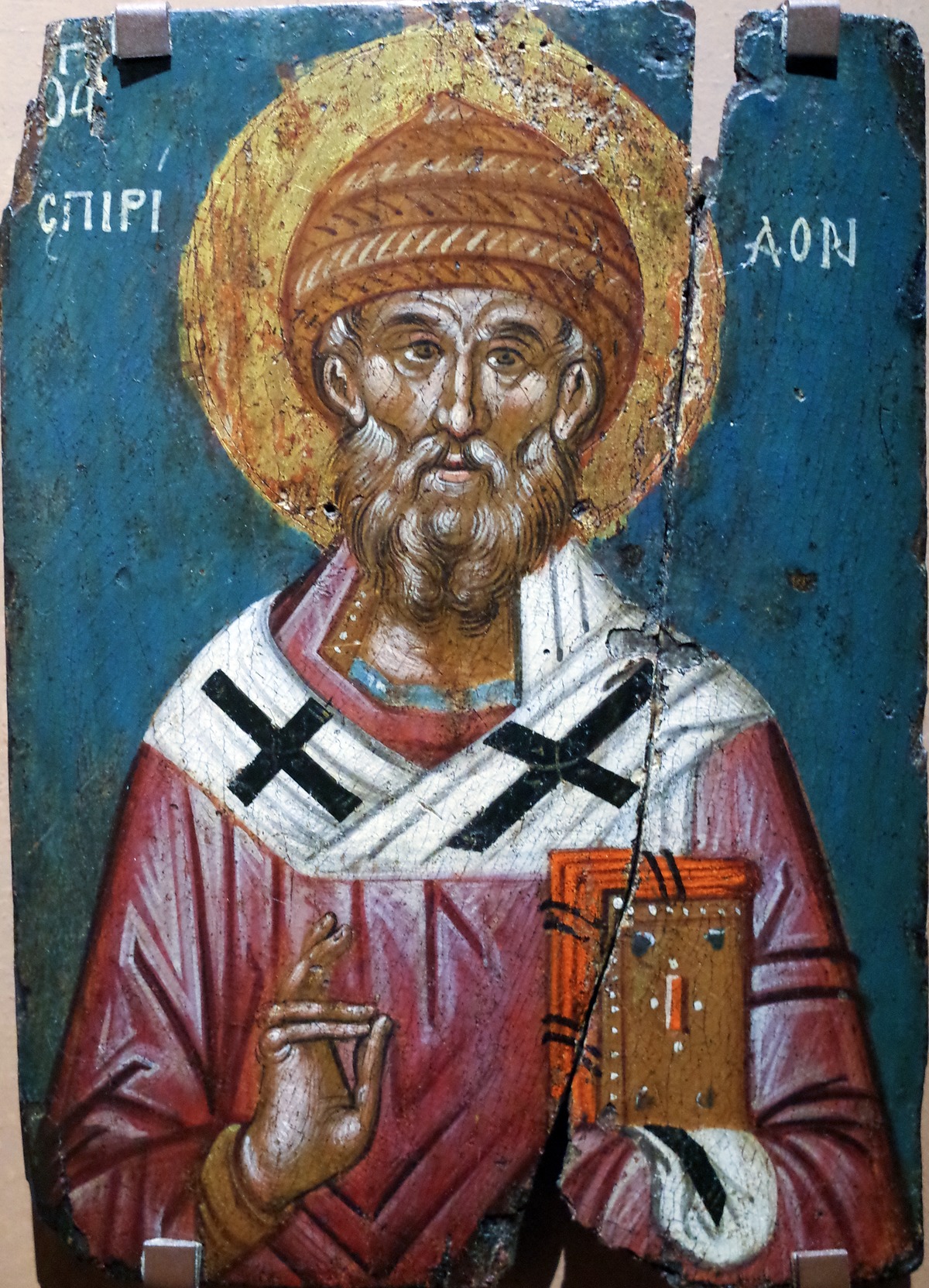 St. Spiridon is commemorated with special solemnity in the Greek Church. The Synaxarion tells us, that “he led the peaceful life of a simple shepherd. He was a plain, unpolished countryman and yet without equal when it came to love of neighbor, meekness, acts of kindness, almsgiving and the practice of virtues.” He was a man of hospitality, who would break his ascetic fast to feed a stranger in need. He was a man of simple and plain words, who put to shame the vain eloquence of a prelate “who wanted to show off by altering certain words of the Gospel too common for his taste.” He was a perfect example of a saint, for through him the love of Christ manifested itself, raising the dead, stopping droughts, looking into the hearts of sinners and forgiving them. Because of his Christ-like virtues, he was called from being a shepherd of sheep in the field, to being the bishop pastor of Christ’s rational sheep in Tremithus. In this way, he was the fulfillment of the shepherds who came to Christ at his birth.
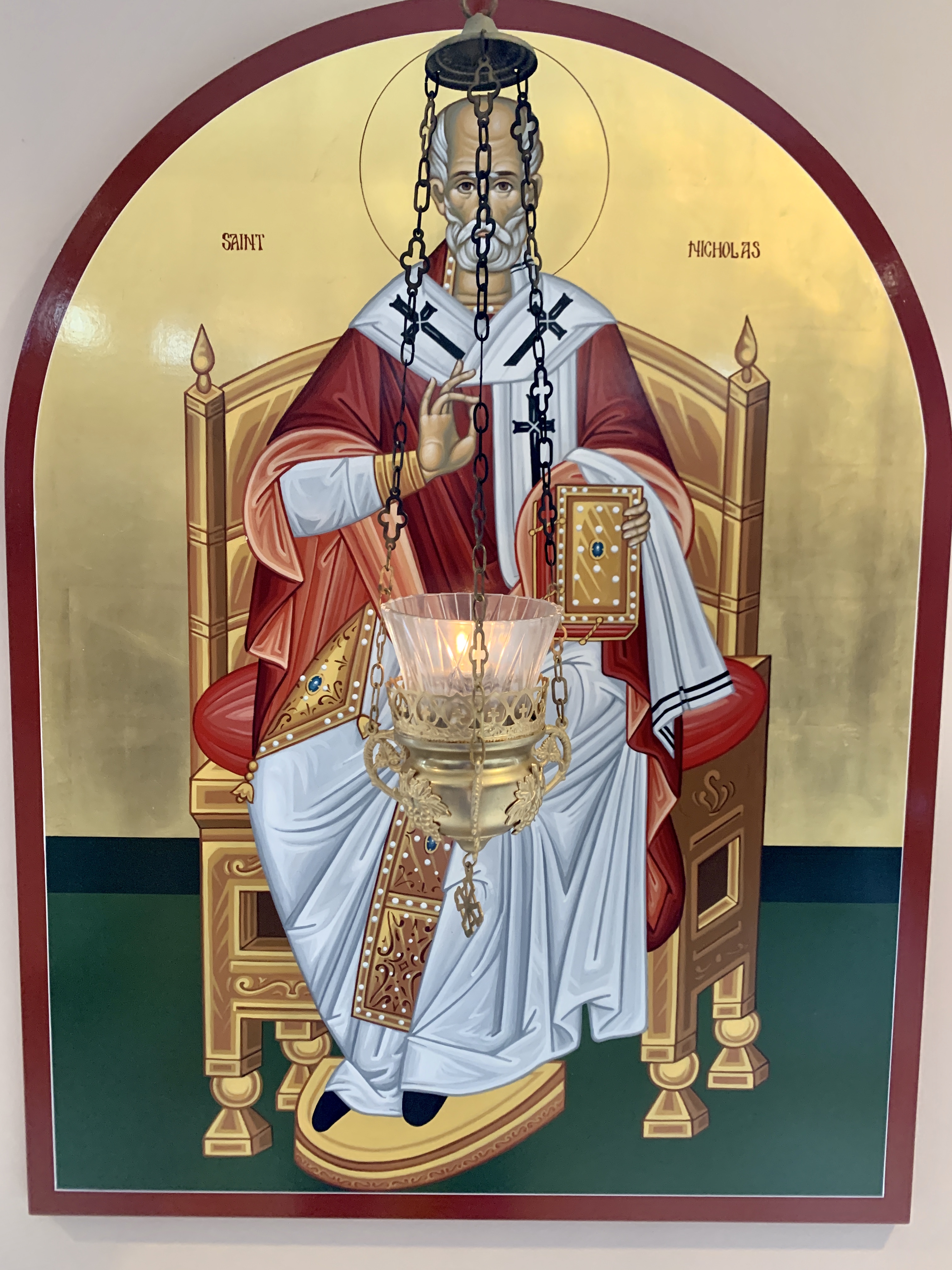 One can easily say that the greatest saint of the Byzantine Church is Nicholas the Wonderworker, Archbishop of Myra in Lycia. Yet the only thing we know of him for certain is his name, and that a holy man named Nicholas was the bishop in Myra in the fourth century. He has become essentially connected with the feast of Christmas. While the details of his life are certainly legendary, the first appearance is the Vita per Michaelem, in the ninth century, and then by Simeon Metaphrastes in the tenth century, yet we cannot help but suspect that there is a tradition of the goodness of his character that prompted such stories. He is the a golden example of all that is good in a true Christian, following the Lord in love for the poor, in joy of salvation, and in greatness of heart. Where, then, the stories written to fit his character. Certainly, the human race is hungry for such a saint, explaining his embrace by Greece and Russia as their patron saint. He gave a dowry to the poor girls, he saved sailors from storms, he obtained the liberation of those falsely accused. When his body was taken from Myra to Bari, the goodness of his life made him a favored saint throughout all the West.
 There is little doubt that the legendary story of the Holy Martyr Barbara was embellished a bit by early hagiographers. There is no reason for this, since the mere fact that someone who comes to faith in Christ is willing to lay down their life for him. For this reason, the more plausible facts of her life are a beacon for us who struggle in and for the faith. Her story tells us that she was a philosopher, a “lover of wisdom.” It was her love of wisdom, guided by grace that brought her to faith in the one true God in the Holy Trinity. It is a reminder that our faith is not blind, it is rational, based on an authentic consideration of reality. Clement of Alexandria was one of the first Christians to see the value of Greek philosophy for the Christian faith, and on this same day, December 4, we celebrate the memory of Our Holy Father John Damascene, who wrote a massive work, the Fount of Wisdom, reasoning about our faith.
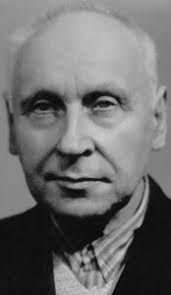 Ivan Sleziuk is one of the Ukrainian martyrs from the Soviet era persecution of the Church. He was born January 14, 1896, ordained priest in 1923 and ordained bishop in April 1945. Arrested in June 1945 and sentenced to 10 years in a labor camp and then after a release was arrested a second time and sent to a prison camp for another 5 years being released in 1968. Bishop Ivan died on December 2, 1973.
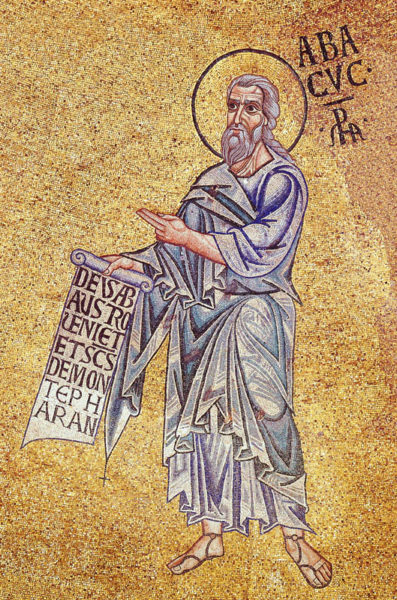 Habakkuk prophesied in Judah during the last half of the 7th century BC. He was one of the temple prophets — that is, his oracles were composed to be sung in temple worship; thus, they took the form of lamentations and canticles. Their liturgical character has persisted in out monastic office where the third chapter of his book is used as the fourth canticle of the traditional matins canon.