Glory to Jesus Christ
Sunday, 6/11/17 First Sunday after Pentecost — Sunday of All Saints
9:00 a.m. Special Intention
10:30 a.m. For the people of the parish
Epistle: Hebrews 11:33-12:2
Gospel: Matthew 10:32-33, 37-38, 19:27-30, Tone 8
Monday, 6/12/17 Venerable Father Onuphrius the Great
8:00 a.m. no intention for the Divine Liturgy
Tuesday, 6/13/17 Holy Martyr Aquilina
8:00 a.m. no intention for the Divine Liturgy
Wednesday, 6/14/17 Holy Prophet Elisha
9:00 a.m. + Joseph Levitzky (Pan.) requested by Joseph M. Levitzky
Thursday, 6/15/17 Holy Prophet Amos
8:00 a.m. no intention for the Divine Liturgy
Friday, 6/16/17 Our Father and Wonderworker Tychon of Amathus
8:00 a.m. no intention for the Divine Liturgy
7:00 p.m. Moleben to Jesus Christ
Saturday, 6/17/17 Holy Martyrs Manuel, Sabel, and Ismael
8:00 a.m. no intention for the Divine Liturgy
Sunday, 6/18/17 Second Sunday after Pentecost — Father’s Day
9:00 a.m. For All the Fathers of the Parish, living and deceased requested by Sestrichi
10:30 a.m. For the People of the Parish
Epistle: Romans 2:10-16
Gospel: Matthew 4:18-23, Tone 1
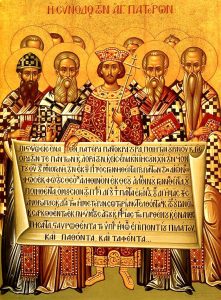 On this Sunday, we commemorate the First Ecumenical Council held in the year 325. This Council defined our faith in Christ, that he was truly God, who had been born of the Virgin Mary as a human being, therefore uniting God and us. The proclamation of faith that they composed is now read at every Divine Liturgy. It was completed in its present form at the Council of Constantinople in 381, with a fuller definition of the nature of the
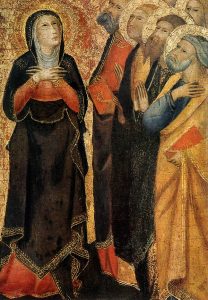 Sunday, 5/28/17 Seventh Sunday of Pascha, Holy Fathers of the 1st Ecumenical Council of Nicea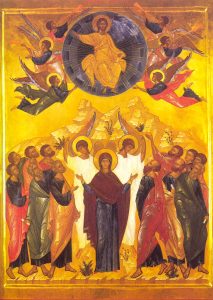
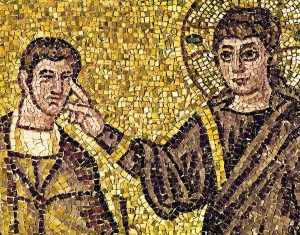
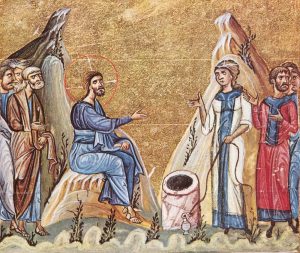 The theme of baptism continues in this Sunday’s Gospel, re-affirming that Pascha is a feast of resurrection and of baptism, being born into eternal life. The center of Jesus’ conversation with this unnamed woman (the Church later gave her the name Photine, the “enlightened woman”) is about water. They met at Jacob’s well, a place of great tradition, a sign and a promise of God’s love and mercy for his people. Jacob’s well provided the riches of water to a desert place, the sign that God would always provide for and bless his people. However, the encounter with the woman reveals something more: Jesus is the Messiah to come, he is greater than the Patriarch Jacob. The water of Jacob’s well is only for this world, Jesus would give “the water that would become a spring of water welling up to eternal life. (John 4:14)” This clearly refers to our baptisms, as it comes immediately after the comparison of Jesus with John the Baptist, and the baptisms done by Jesus’ disciples.